







































How AI-Powered Data Processing Improves Enterprise Data Pipelines
AI-powered data processing automates workflows and reduces bottlenecks, enabling faster, more reliable enterprise data movement across systems.
With AI data processing tools, you can:
Automate Data Ingestion and Integration
Data and analytics leaders estimate that 19% of their company’s data is siloed, inaccessible or otherwise unusable, according to Salesforce’s State of Data and Analytics Report. Automate data ingestion and integration to streamline how you collect and standardize data across systems. This creates unified master data, reduces reliance on manual processes and keeps data flowing consistently as your environment scales. By automating data ingestion and integration, you can:
- Eliminate data silos across systems and platforms
- Maintain consistent, up-to-date workflows
- Scale data pipelines as you add new sources
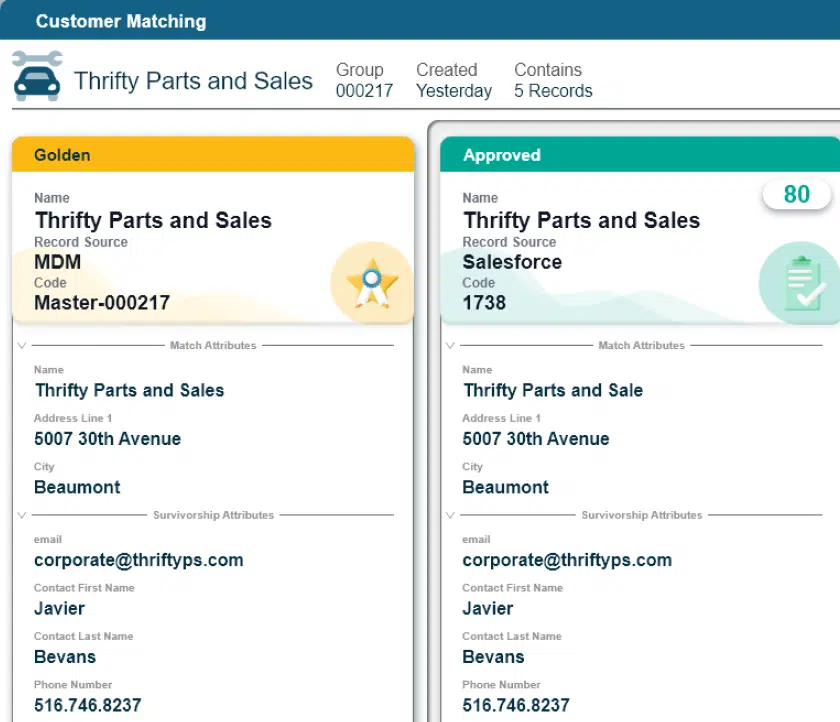
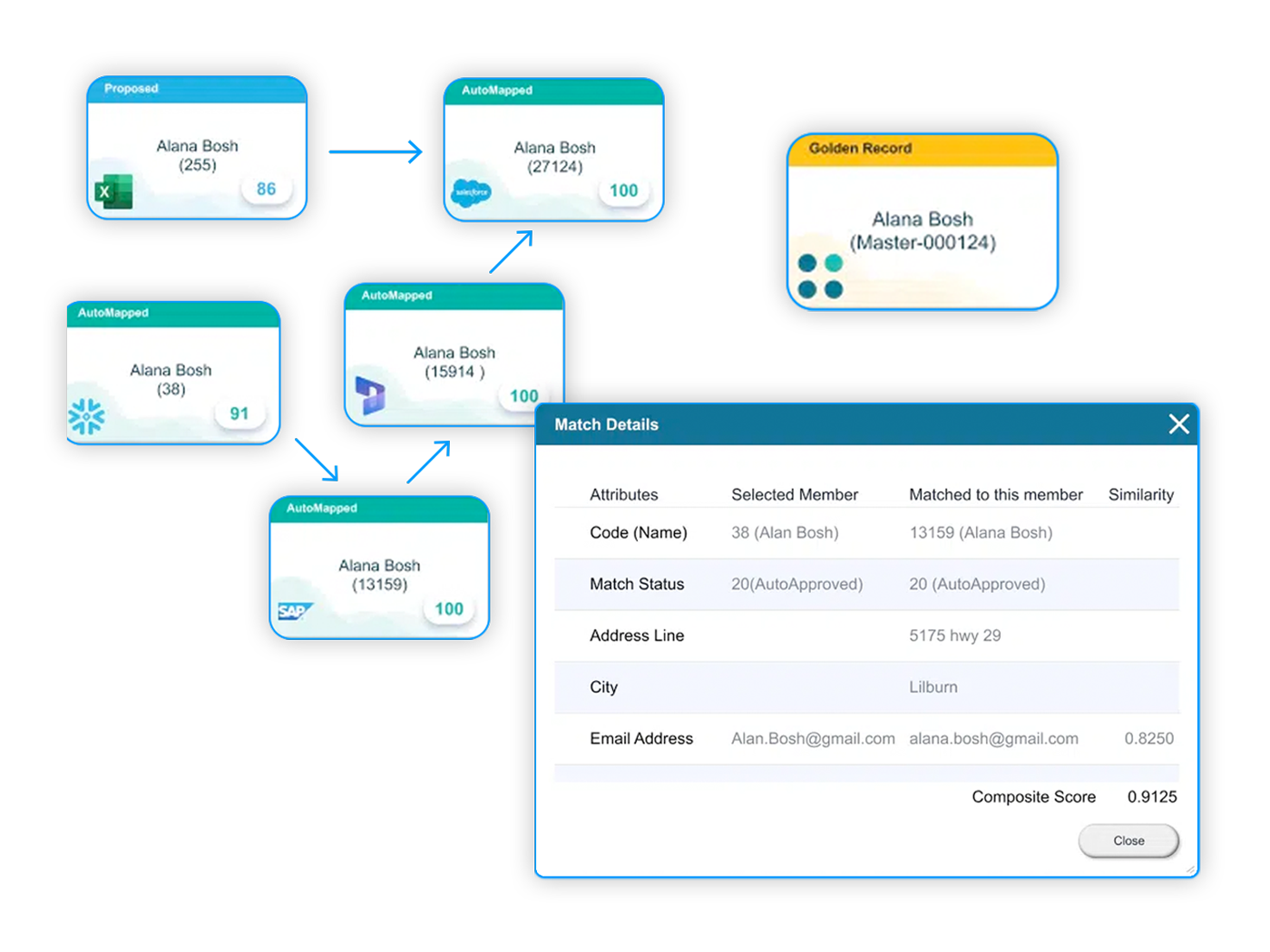
A platform like Profisee MDM, for example, enables golden record management, the process of creating a single source of truth that contains essential data about an entity, supporting decision-making and reducing errors due to discrepancies in your data.
Accelerate the Processing of Large Datasets
AI accelerates the processing of large datasets, keeping records moving through pipelines without delays from batch workflows or resource constraints. Data becomes available for analysis sooner, helping you:
- Support continuous data processing
- Increase throughput without adding infrastructure complexity
- Provide faster access to usable data
Process Structured and Unstructured Data
Processing both structured and unstructured data expands the volume of usable information across your organization. It allows teams to extract value from documents, images and text that traditional systems cannot easily process. This flexibility lets you:
- Ensure data completeness for BI analytics and AI models
- Reduce reliance on manual data preparation
- Enable more comprehensive insights across data sources
Get Real-Time Analytics and Insights
Real-time data processing enables you to analyze data as it flows through pipelines without waiting for scheduled updates, supporting faster, more informed decision-making across the business. Expanded visibility ensures that you:
- Enhance responsiveness to operational and market changes
- Reduce latency between data ingestion and analysis
- Support more accurate, timely business insights
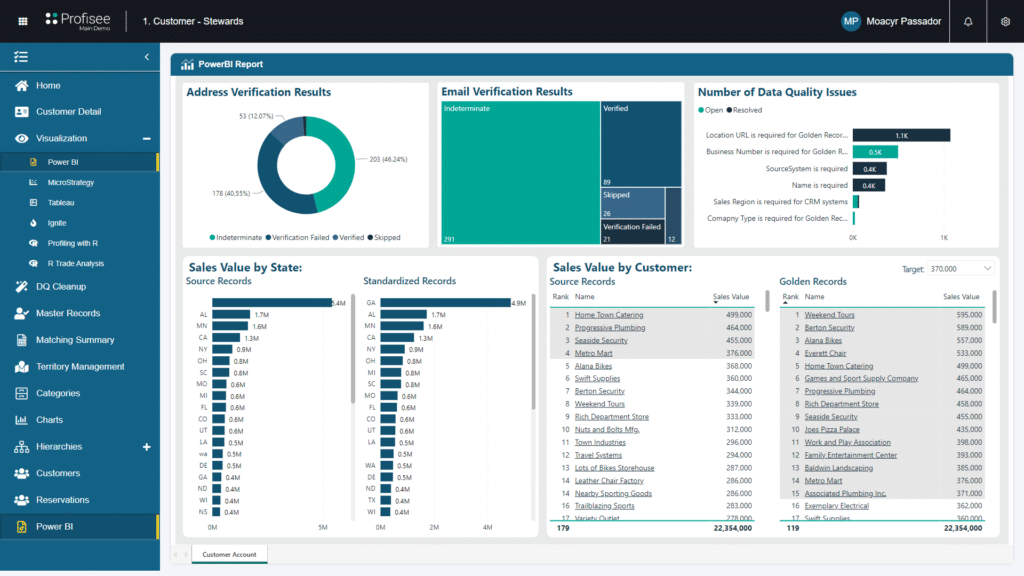
Using master data management platforms like Profisee, you can access Power BI dashboards that show data quality and validation results for your data, including issues like missing, invalid, duplicate or non-compliant records.
4 AI Methods for Ensuring Data Integrity During Data Processing
Without strong data integrity, integrating AI in your data processing workflows can amplify small errors and introduce larger inconsistencies. As we highlight in our State of Master Data Management report, embedding AI into core business processes raises the bar for data quality, governance and trust. Follow these four methods to maintain integrity during AI-powered data processing:
Method 1: Instant Anomaly Detection and Outlier Removal
AI-driven anomaly detection can immediately identify unusual patterns and inconsistencies (such as aggressive volume spikes) as data moves through pipelines. These solutions continuously monitor data in real time, flagging issues like duplicate records or missing values as they occur.
Data insights, such as distribution shifts or revenue spikes, help prevent errors from propagating into downstream systems, reduce the impact of outliers on analytics and boost overall data consistency across environments.
Method 2: AI-Powered Data Extraction and Processing for Unstructured Sources
When you implement AI systems, it becomes easy to turn your unstructured data from scanned documents and images into structured, usable formats. At the same time, you reduce reliance on manual extraction and help standardize data before it enters the pipeline. By improving how you handle unstructured data, you can scale usable data, increase data completeness and reduce errors introduced during manual processing.
Method 3: Predictive Data Validation and Cleansing
AI-powered validation helps you identify recurring data quality issues and apply corrections during processing. Validation runs continuously as data moves through the pipeline, so you can catch errors earlier, reduce manual cleansing efforts and maintain consistent, high-quality data across large, complex datasets.
With Profisee, you can ensure that AI-powered data extraction and processing operate on a foundation of trusted data. By eliminating the garbage-in, garbage-out cycle, the platform provides the high-integrity data that AI models need to deliver accurate business outcomes.
Method 4: Automated Lineage and Integrity Auditing
Artificial intelligence can track how data moves and changes across systems, providing visibility into lineage and transformations. Your AI tools create a clear record of how data is processed and where changes occur so that you can verify data accuracy with confidence. These insights support compliance requirements and help you quickly identify and resolve data integrity issues.
Enable Trusted AI for Data Processing at Enterprise Scale with Profisee
Without a strong data foundation, faster pipelines and advanced models only accelerate the production of bad outputs. Profisee’s Master Data Management ensures data flowing through systems is clean, unified and ready for use. Our platform embeds quality controls directly into your workflows, so you deliver reliable, scalable outcomes. Profisee enhances data integrity and pipeline performance with:
- Multidomain flexibility: Manage customer, product and location data in a single, centralized platform.
- AI assistant Aisey: Automate configuration, setup and routine data stewardship tasks.
- Real-time data quality: Apply validation and enrichment rules to identify and resolve issues as data moves through pipelines, ensuring AI readiness.
- Cloud-native scalability: Deploy across cloud or on-premises environments with flexibility and speed.
- Platform integration: Connect data sources and maintain a consistent flow of trusted data across systems.
Book a demo today and see how Profisee enables AI data processing for your enterprise.