Implement Reference Data Management into Your Business Strategy

Save time and effort by standardizing reference lists and contextual records across your business with Profisee’s Master Data Management (MDM) platform.
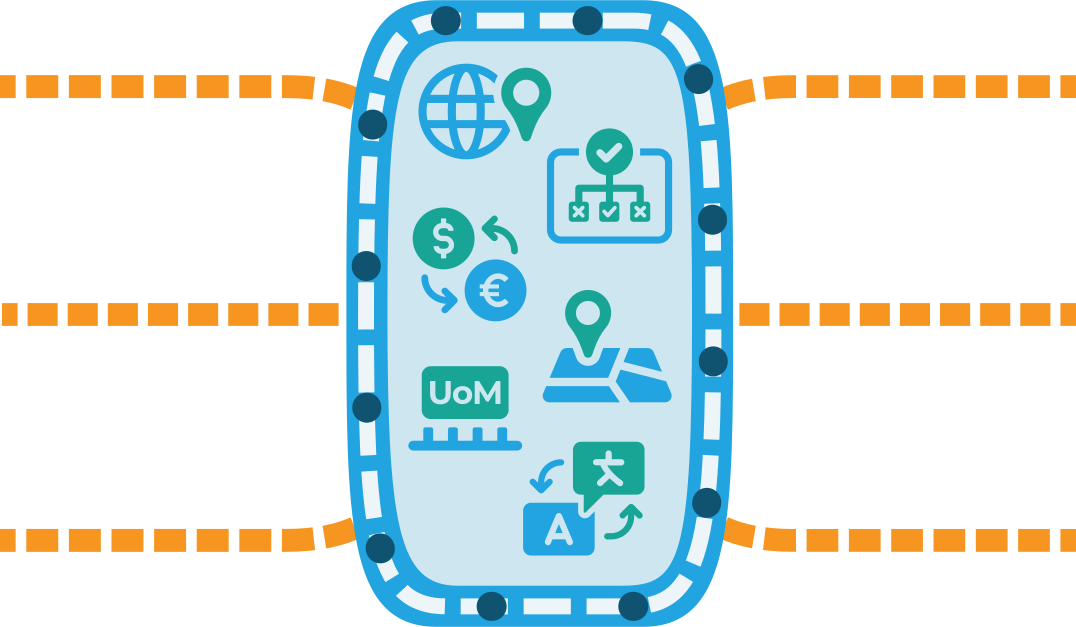
Graphic featuring currency abbreviations, regions, and languages overlaid on a blurred background.

Poor Reference Data Can Affect Your Business

From country codes and currencies to product categories and industry classifications, reference data impacts each and every part of your organization.

Tracking lists by hand across multiple systems often leads to challenges such as:

Wasting

time with manual data prep

Unnecessary

operational costs

Misleading

reporting and analytics

Level Up Your Operations Reference Data with Reference and Master Data Management

MDM and reference data management solutions allow you to drive consistency across enterprise systems to improve information quality while eliminating manual clean-up for reporting and analytics.

Reference data management tools standardize common data attributes and records, so you can:

MANAGE and store reference data in a central MDM hub

ELIMINATE operational costs of storing data in multiple systems
STREAMLINE data updates from a centralized platform
PUBLISH changes to source systems and downstream applications
IMPROVE the quality of reporting and insights
INFORM and provide context around BI and analytics reporting

Unify Your Assets Data with Referential Data Management

Profisee’s capabilities go beyond simple list management, helping you control, synchronize and master reference data as a strategic business asset.

Cloud-Native Deployment

Deploy Profisee via SaaS, PaaS, on-prem or hybrid in any cloud.

Data Integration

Connect and publish trusted reference data to source systems and downstream applications.

AI Readiness

Expose governed reference lists to AI agents through your MCP Server in machine-readable form.

Data Matching

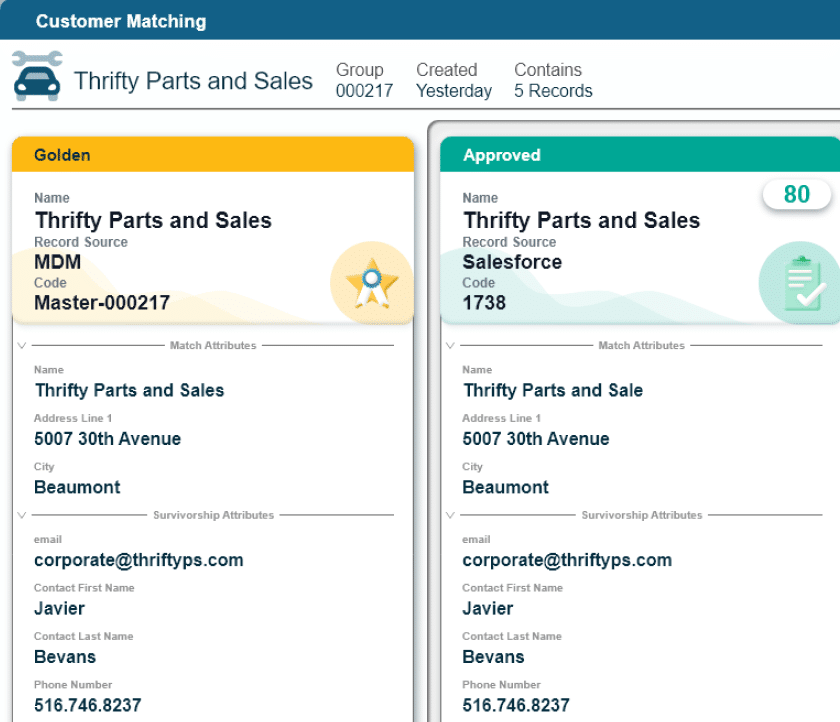
Detect, merge and resolve duplicates or anomalies with built-in matching and survivorship logic.

Relationship Management

Model reference lists, hierarchies and relationships across domains using an interactive UI.

Data Governance

Enforce business policies and give data stewards visibility into changes, lineage and approvals.

Discover How Profisee Turns Your Data from a Liability into an Asset

The Impact on Our Customers

A downward-pointing chevron arrow. $ 0 MM
in cost savings
An upward-pointing chevron arrow. 0 X
more partners onboarded daily
A downward-pointing chevron arrow. 0 %
less time cleaning data
A downward-pointing chevron arrow. 0

hours saved correcting data

See How Customers Standardized Their Reference Data with Profisee

See the Profisee MDM Platform for Yourself

View a demo on demand or schedule a custom demo to experience the Profisee MDM platform firsthand. Learn how it can help turn foundational lists into reference master data across your entire organization so you can finally launch your strategic business initiatives.

Frequently Asked Questions

Reference data management is the practice of keeping the shared lists your business runs on, such as country codes, currencies and product categories, correct and consistent across your systems. Organizations often use a master data management (MDM) solution to create a golden record that acts as the approved source for those values.

When a data steward adds, removes or updates any information, the MDM platform applies that change in every other solution using the reference data.

Explore our guide on reference master data.

Master data management (MDM) is the process that ensures your enterprise is using the most up-to-date information about customers, products, suppliers and locations. Reference data management (RDM) focuses on organizing the smaller, standardized lists that define valid values for master data domains, such as country codes, currencies or industry classifications.

Together, MDM and RDM ensure every system across the enterprise uses consistent, accurate and governed information.

Compare reference and master data management.

Reference data management software is the tool that helps you centralize, manage and control shared lists and codes used across multiple systems. Profisee RDM, for example, helps you standardize reference data, apply governance rules and publish updates to downstream systems, creating consistent reporting and analytics everywhere.

Reference data management works by creating a single version of truth for all shared code sets and lookup lists across your organization. In most companies, reference data, including country codes, product categories or payment types, lives in multiple systems. Each department may maintain its own version of those records, which leads to mismatched values, broken integrations and reporting errors.

An RDM platform like Profisee centralizes reference records in one hub. The management workflow runs in three steps:

  1. The RDM platform collects all the record versions that exist today.
  2. AI agents compare all the information, merging data that might be duplicated, agree on which values are official, then put the reference master data in one hub with rules for changing them.
  3. The built-in agents approve changes to every application that reads them, from finance systems to analytics dashboards.

Explore how financial reference data management helps you optimize services.

You need reference data management (RDM) tools because they keep your business systems aligned, your reports accurate and your operations efficient. Reference data management tools help you:

  • Centralize control: Store all reference data in one governed hub instead of scattered spreadsheets or disconnected systems.
  • Standardize data: Enforce common definitions and code sets so every application speaks the same language.
  • Automate record updates: Push approved changes automatically to downstream systems, maintaining consistent enterprise data quality.
  • Stay audit-ready: Track who made each change and when, which is critical for regulatory compliance and trust.
  • Improve reporting and analytics: Create reliable and actionable reports by having every system use standardized reference data.

Manual reference data management through Excel or emails might work for small teams, but as your organization scales, the complexity multiplies. RDM tools eliminate that risk by ensuring data governance and transparency across your enterprise.

When evaluating a reference data management platform, look for:

  • Integration flexibility with your existing systems (ERP, CRM, analytics)
  • Automation and governance features, such as workflow and validation rules
  • Ease of use for data stewards and business users
  • Scalability across multiple domains and business units
  • Deployment options (cloud, on-prem or hybrid)
  • AI readiness so automated agents and applications can read governed values directly

Profisee’s platform checks all these boxes with built-in integration, automation and governance capabilities for market and reference data management.

Yes, in theory, you can manage your reference data in Excel. But it quickly becomes unsustainable. Excel doesn’t support version control, audit trails or automated publishing to other systems. As your business grows, maintaining reference data in spreadsheets creates inconsistencies and slows down reporting. A dedicated RDM platform ensures accuracy, control and scalability for reference and master data management.

Successful reference data management creates controlled, scalable business processes that keep record values accurate, consistent and governed across the entire organization. Here are the key best practices to follow:

  • Centralize reference data in a governed hub: Bring all reference data into a single, authoritative platform like Profisee.
  • Define data stewardship: Assign clear roles for who can create, edit, review and approve changes in the reference master records.
  • Enforce validation and survivorship rules: Use rule-based validation to catch bad data entries before they spread into your systems.
  • Automate workflows and publishing: Implement automation so approved changes flow seamlessly to all connected applications, from ERP to analytics.
  • Track versions, lineage and history: Maintain a clear audit trail showing when data changed, who changed it and why.
  • Integrate RDM with MDM and analytics systems: Maximize your reference values by connecting RDM to master data domains and reporting tools.
  • Build reference data maintenance into your process: Review lists regularly so stewards can update outdated values as business requirements change.
  • Design for scalability and AI readiness: Grow your reference data with your business and support advanced analytics, automation and AI use cases by making your data AI-ready from the start.

LET'S DO THIS!

Complete the form below to request your spot at Profisee’s happy hour and dinner at Il Mulino in the Swan Hotel on Tuesday, March 21 at 6:30pm.

REGISTER BELOW

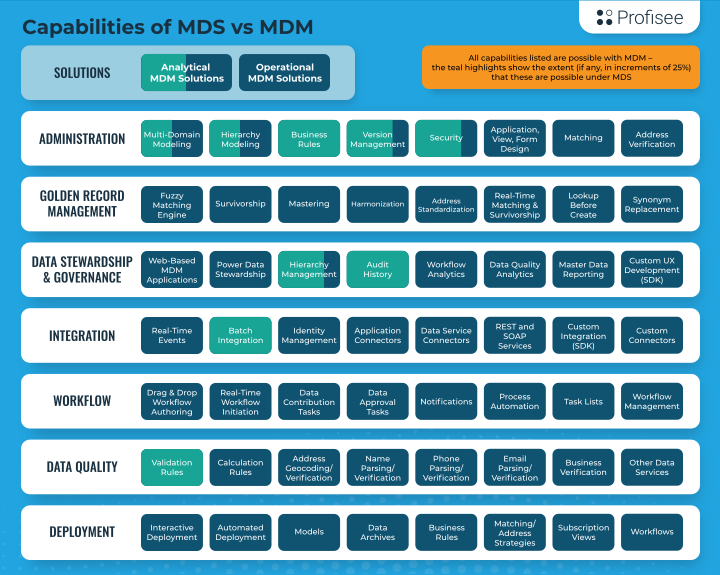
MDM vs. MDS graphic

Miss Data Hero Summit live? Watch the replay and learn how heroes like you are tackling the biggest data challenges