










































What Is the Role of Matching in Healthcare Data Interoperability?
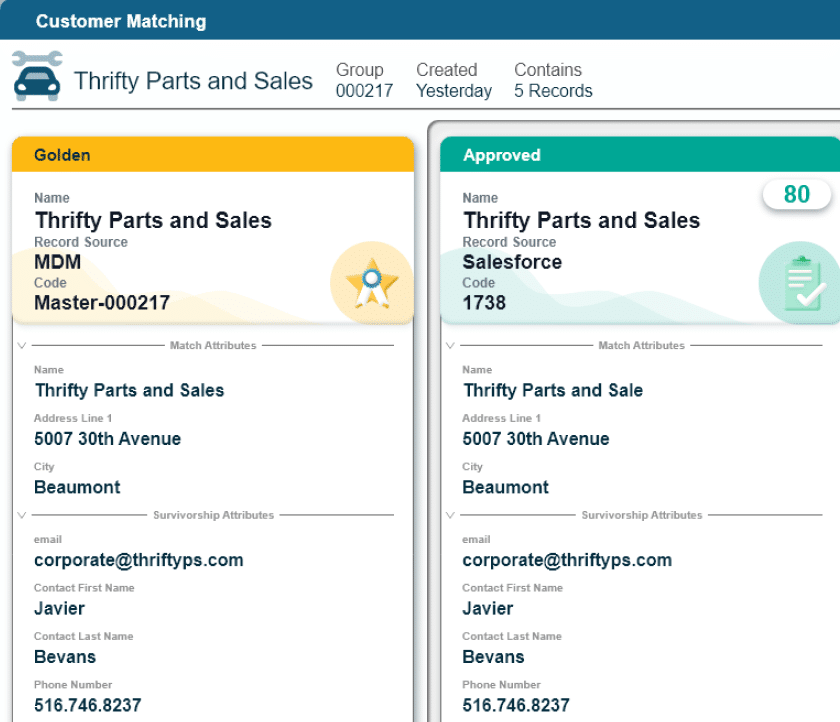
Record matching identifies when two or more records sitting in different systems, often with conflicting fields, point to the same patient, provider, facility or payer and then resolves them into one trusted profile. Without this process, healthcare interoperability software moves data from one place to another, but it can’t tell for sure whether “Dr. John A. Smith,” “J. Smith MD” and “Jonathan Smith” are the same provider. It also can’t determine whether two similar patient profiles should stay separate or be merged. A master data management (MDM) solution like Profisee solves the record conflict issue in five steps:
- Source record ingestion: The MDM tool brings patient, provider and reference data together from all sources.
- Attribute standardization: The system normalizes names, addresses, phone numbers, taxonomy codes, specialties and other fields so you can compare records consistently.
- Match rule application: The workflow applies deterministic, probabilistic, AI-assisted or fuzzy matching to identify details that likely describe the same patient, provider, facility or claim.
- Exception management: The matching tool routes uncertain records to data stewards for review, which helps prevent risky automated decisions.
- Golden record creation and distribution: The solution combines trusted attributes into one accurate, governed record and publishes that data back to the systems, APIs and analytics environments that depend on it.
Key Healthcare Interoperability Challenges
The healthcare interoperability challenges that derail most programs come from these data quality issues hiding underneath the technical handoff:
- Fragmented clinical data silos in disconnected EHR platforms that block any single team from seeing a complete patient history.
- Duplicate patient identity records and inconsistent provider directory listings that send individuals to the wrong specialist and trigger CMS audits.
- Conflicting medical terminologies and inconsistent clinical coding standards that break analytics and quality reporting within organizations.
- Inefficient manual data matching and crosswalk processes that fail to scale as new payers, networks and reference tables come online.
How to Ensure Data Interoperability in Healthcare with Master Data Management
Healthcare master data management provides organizations with a shared source of truth for all entities, so exchanged data doesn’t depend on the system that created it first. These four practices produce a single trusted record for each patient, provider and claims transaction:
1. Build a Single Golden Record per Patient, Provider and Payer
A single golden record gives every downstream system the same trusted identity to work from. Provider data is often the right place to start because it changes faster than most healthcare organizations can manage manually. Affiliations shift, demographic details change, directories become outdated and mergers add new layers of inconsistency.
When each system keeps its own version of a provider record, those small differences quickly turn into bad directories, claim delays, compliance exposure and poor patient routing:
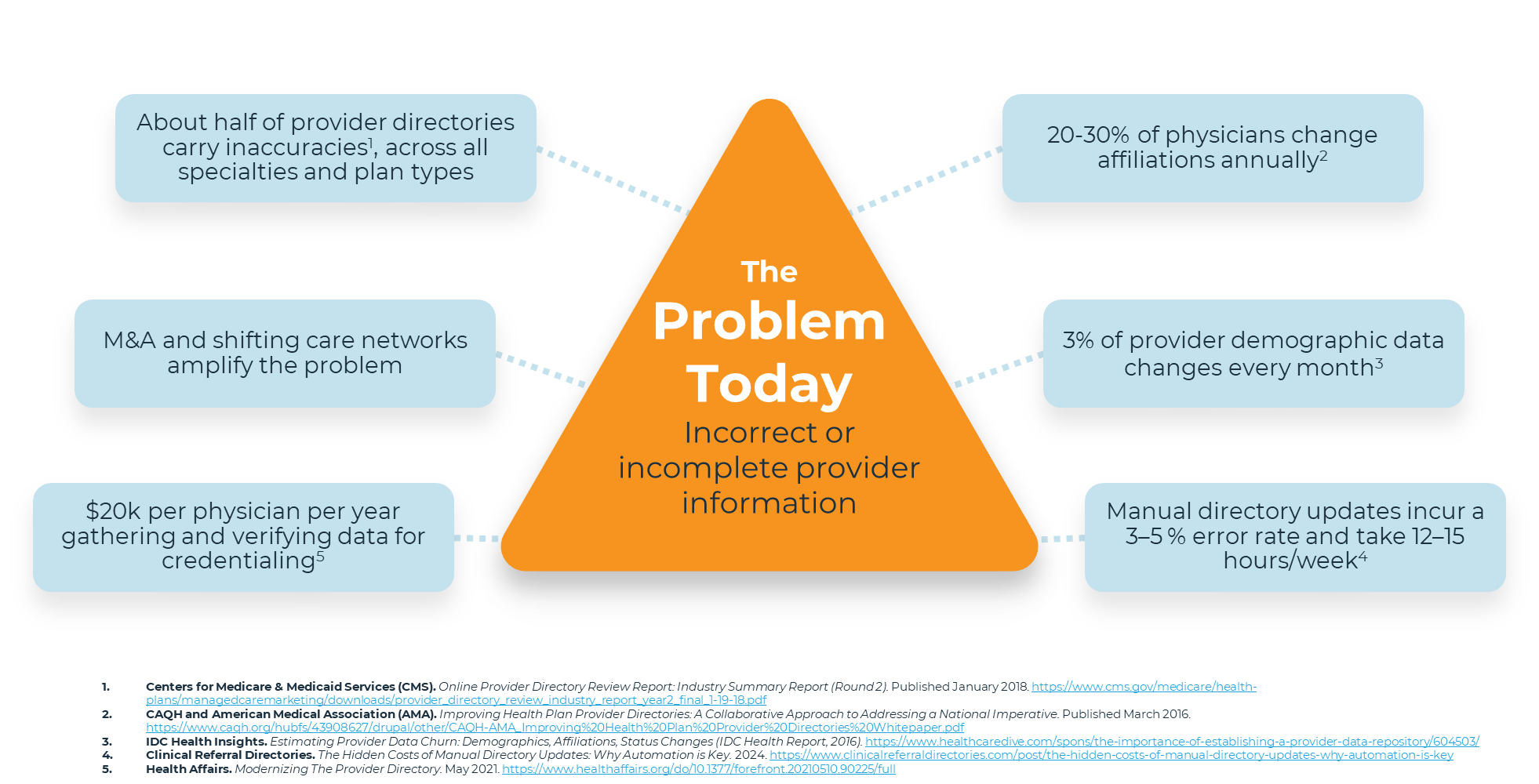
Pick the highest-pain entity resolutions to start and master them end-to-end:
- Pull every source that holds provider data (credentialing, EHR, HR, claims).
- Define your match rules, run them through an automated matching engine and let MDM survivorship rules pick the winning value on each field.
- Repeat the pattern for patients and payers.
One mastered domain delivers value within months, while multidomain MDM coverage keeps interoperability sustainable.
2. Automate Provider Taxonomy and Reference Data Crosswalks
While many sources use National Uniform Claim Committee (NUCC) taxonomy codes, they often customize descriptions for local use, which disrupts downstream systems expecting standardized text.
With an MDM for healthcare like Profisee, you ingest the NUCC tables into the technology, build the crosswalk once, then let stewardship workflows push automatic updates whenever the author publishes a new version. Without that automation, developers rebuild the same mappings every quarter and still mismatch specialty data against board certifications for clinicians who hold none.
3. Standardize Patient Addresses and Demographic Elements
Patient matching collapses when address formats differ across registration, billing and referrals. MDM technologies offer integrations with U.S. Postal Standards and additional location identifiers, such as geospatial records. These platforms also help healthcare organizations to do data address verification for patients, manage mappings, continual updates and changes, multiple types of addresses, quality variances and the stewardship of issue resolution.
By matching duplicate or related records, applying survivorship rules and giving stewards a way to review exceptions, healthcare organizations avoid duplicate provider listings, fragmented patient profiles and conflicting records that undermine trust in exchanged data.
4. Govern Reference Data and Assign Stewards by Domain
Licensed medical code sets change on their owners’ schedules:
- The American Medical Association (AMA) revises its Current Procedural Terminology (CPT) codes every year.
- Logical Observation Identifiers Names and Codes (LOINC) and Systematized Nomenclature of Medicine – Clinical Terms (SNOMED CT) ship new releases of their own.
Each release shifts the crosswalks that map your source data to the standard CMS and payers expect, so someone has to vet every change before it spreads downstream.
Assign one data steward per domain, route each reference change to them for workflow-driven approval and let your MDM solution propagate only the approved version to every connected system. The code sets define what correct means, the steward decides when a change is safe and MDM enforces that decision everywhere at once.
Best Practices for Healthcare Data Interoperability
These four best practices for healthcare data interoperability separate programs that scale from programs that stall after the first compliance deadline:
1. Prioritize Semantic Interoperability Across Data Standards
Two systems can pass data back and forth in a valid format and still get the meaning wrong. For example, one hospital could record a lab result in milligrams per deciliter, another in millimoles per liter. If a clinic writes “MI” for a heart attack, another might read those same letters as a different condition.
You need to agree on the definitions: which standard code set names each diagnosis, lab and procedure and which system to trust when two of them describe the same patient differently. Settle those rules before you connect the first system, so every record means the same thing when it arrives as it did at the source.
2. Automate Patient and Provider Data Matching
When staff match records by hand, the backlog grows faster than they clear it and every new payer, network and patient registration adds to it. Let an MDM software do the first pass instead. Have the technology compare each incoming record against your source of truth, merge the obvious matches on its own and send only the genuine maybes to a person.
Then watch one outcome: how often the system correctly links a record to the right patient or provider.
3. Implement a Scalable Healthcare Interoperability Platform
Keep your matching tools out of any single EHR system. When matching lives inside one tool, it only understands that solution’s data and breaks the day you switch vendors or merge with another organization. A healthcare interoperability platform built on master data management sits above all your workflows, so it reads from every source and takes on new ones quickly.
According to the U.S. Department of Health and Human Services (HHS), nearly 500 million health records have been exchanged through the Trusted Exchange Framework and Common Agreement (TEFCA) in early 2026, up from roughly 10 million in January 2025. Hospitals and health systems keep merging, so the real question is not whether you will add new tools, but how fast your platform absorbs them.
4. Enforce Continuous Data Stewardship and Compliance Governance
Set a regular routine with stewards to review data quality on a schedule. Keep an eye on how well the matching is working and log every change to a record along with who made it and when.
That ongoing care keeps the unified record reliable years after you launch. The change log pays off again at audit time. When a payer or regulator asks how a record reached its current state, you hand them a report instead of scrambling for an answer.
Achieve Semantic Interoperability in Healthcare with Profisee MDM
Semantic interoperability in healthcare comes down to one thing: the same patient, provider and code carry the same meaning in every system that touches them. The Profisee MDM platform delivers that through AI capabilities built around matching, governance and data stewardship:
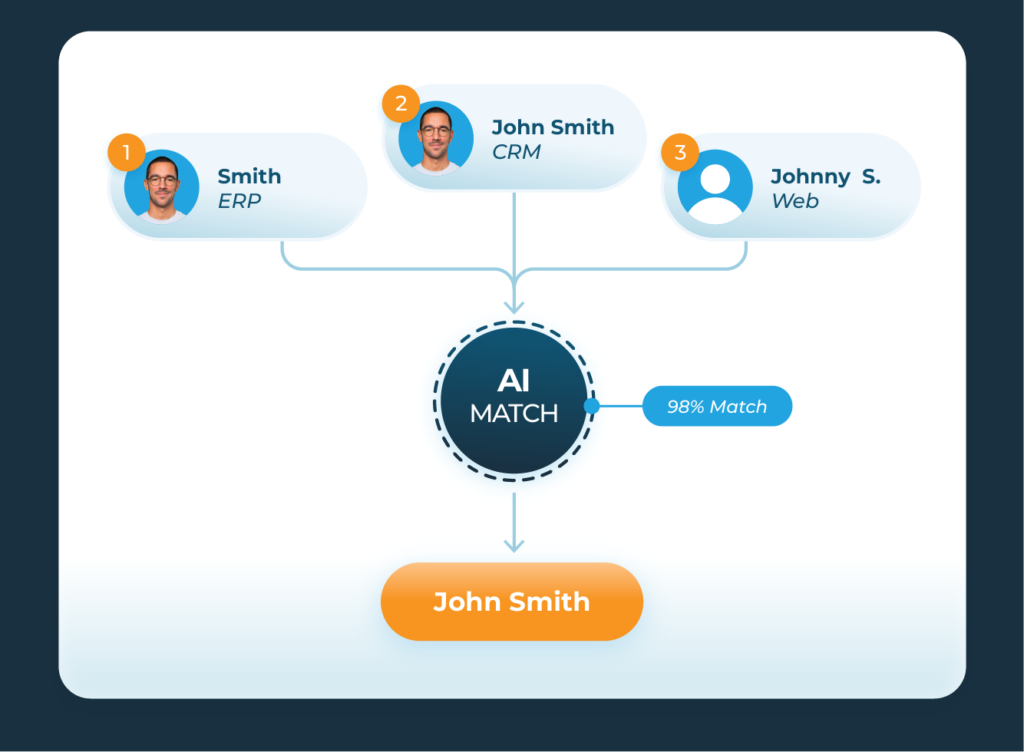
- A machine learning master data management engine that explains why two records matched.
- Configurable survivorship that lets you set field-level rules for which source wins.
- Reference data management for NUCC, LOINC, International Classification of Diseases (ICD) codes and licensed sets like AMA’s Current Procedural Terminology (CPT).
Book a demo with Profisee to see how our MDM platform turns fragmented healthcare data into the trusted master records that semantic interoperability requires.