



















For years, master data management (MDM) followed IT’s timeline. A business team flagged a need, filed a ticket and waited, sometimes for years, for a system that would eventually land in their hands, fully built and largely unfamiliar.
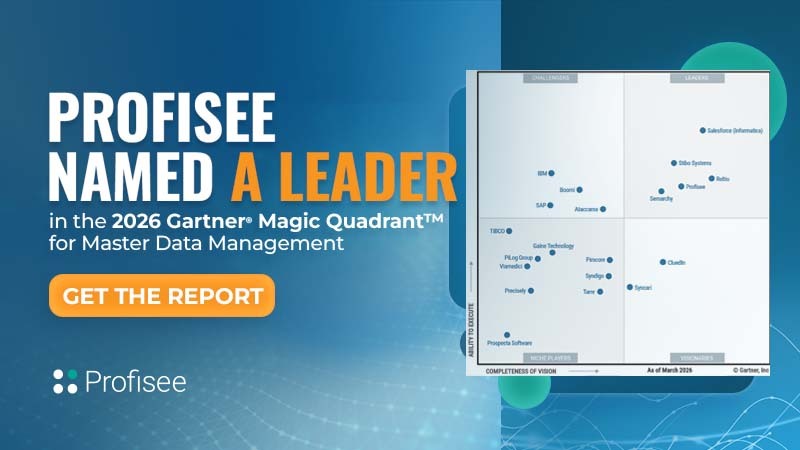
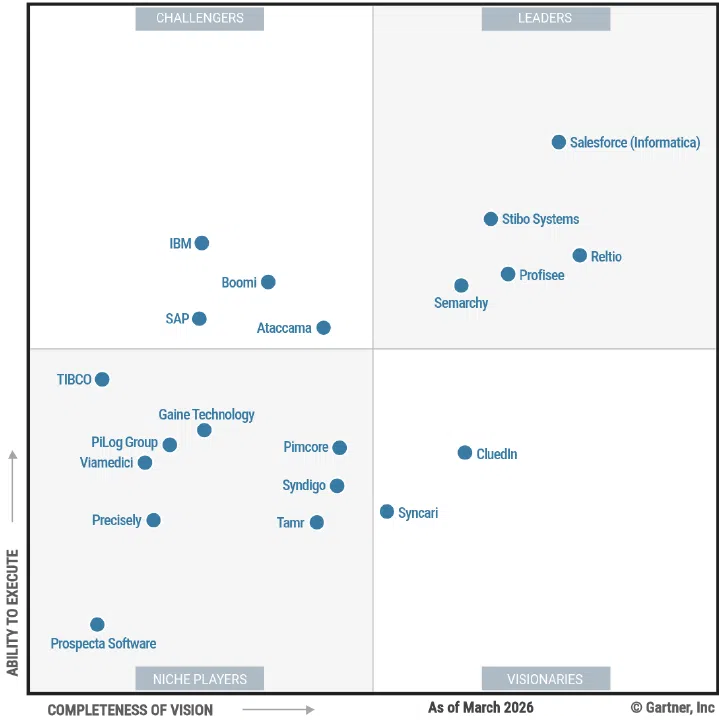
That model is breaking down. The Gartner® 2026 Magic Quadrant™ for Master Data Management Solutionsconfirms why: MDM has become a business initiative that IT supports, not an IT initiative the business waits on.
What’s Driving the Shift to Business-Owned MDM
We’ve already covered why the Magic Quadrant is back after five years and why AI depends on well-governed master data. This blog is about who’s responsible for that master data: IT, the business or both.
Gartner’s report points to a structural change inside the organizations that buy MDM: the rise of the chief data and AI officer, a role that connects data strategy directly to business outcomes instead of routing it through a traditional IT chain of command.
As that role has grown, so has the pressure for MDM to move faster. Gartner describes a market moving:
- Away from monolithic, IT-led implementations that took months to plan and years to deliver
- Toward agile, composable deployments that get value into business hands faster
When the person accountable for data strategy reports to the business, the tools must keep pace with the business, not with IT’s release cycle.
Usability Is a Market Requirement Now, Not a Preference
That shift shows up directly in how Gartner evaluates vendors. Its report calls out three features as common across the market, not as differentiators reserved for a handful of leaders.
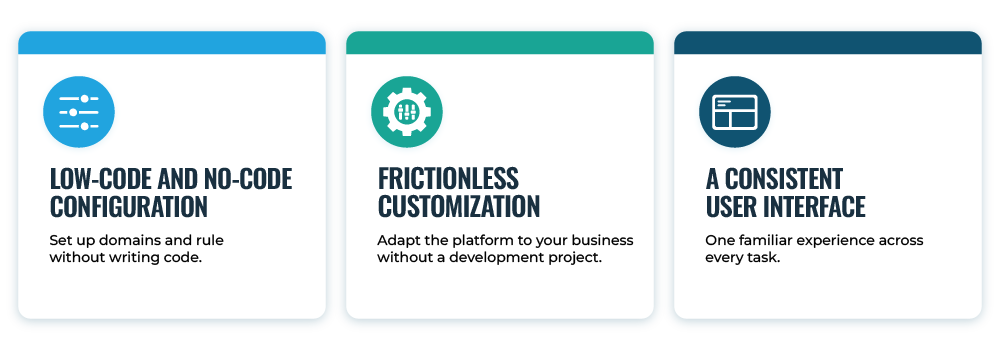
A platform that still needs a developer to configure a new data domain or adjust a matching rule is behind the market now, not ahead of it. Usability is not what closes deals anymore. It’s table stakes for staying in the conversation.
What Business-Led, IT-Governed MDM Looks Like
None of this means IT steps aside. It means the roles split differently:
- IT owns the guardrails: security, architecture and integration standards that keep master data consistent and safe across systems
- Business owns the day-to-day: stewardship and configuration, adding an attribute, adjusting a survivorship rule or standing up a new data domain, without opening an IT ticket for every change
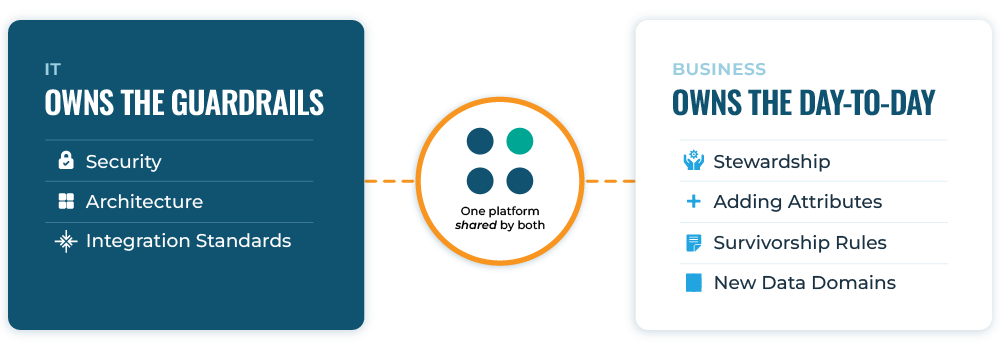
Neither side owns MDM alone anymore. Gartner frames the goal as turning master data “from a guarded IT asset into an accessible data product” that stays governed while the whole business uses it.
Meeting Business Users Where They Work
This is where Profisee’s product direction lines up with Gartner’s read on the market:
- The Microsoft Fabric workload gives business users a single pane of glass for master data alongside the analytics work they already do in Power BI and Fabric IQ.
- Adaptive Cards bring stewardship tasks directly into Outlook and Teams, tools business teams already have open all day.
- The Profisee MCP Server allows businesses to create, update, manage and steward data natively in generative AI tools like Copilot, Claude or ChatGPT.
The result is business-owned, IT-governed MDM.
The goal isn’t a new system for business users to learn. It’s putting MDM inside the workflow they’re already running.
Proof From the Field
Mishcon de Reya, a UK law firm, is one example of what this looks like in practice. At the Gartner Data & Analytics Summit in London earlier this year, Kirit Solanki, director of technology business solutions at Mishcon de Reya, joined Profisee Chief Data Officer Malcolm Hawker on a panel about where MDM fits in a federated data architecture.
Solanki said the firm’s operating model didn’t start with a technology framework. It started with how the business runs. “We don’t have a CEO. We have a set of partners, and each one of those partners is like a CEO in their own right,” he said. “So, by definition, the organization is federated.”