































Episode Overview:
Episode Links & Resources:
Good morning, good afternoon, good evening, good whatever time it is, wherever you are on this amazing planet of ours. This is Malcolm Hawker, and I am your host of the CDO Matters podcast. Thanks everybody for joining. Today, we’re gonna talk about governance, and we’re gonna talk about governance in the public health sector.
So if you work in public health or interested in public health, maybe you just wanna learn more about how to implement a data governance function within a public health institution, today is the episode for you. I am thrilled to be joined by Jonathan Ong. Jonathan is the data director, public health data director for Mecklenburg County, which is South Carolina. Right, Jonathan?
North Carolina, actually.
Sorry, my apologies.
No. No problem. No problem.
Alright. Well well, thank you so much for taking time out of your busy day to to chat with us. We had talked, oh, about six weeks ago. Just loved when when we were having a conversation about Jonathan being on the podcast, I just loved the story about standing up a governance function, starting small, starting with a smaller team.
So let’s get into that, and and let’s focus on on that specifically. Starting a governance function within a public health institution with a smaller team. Jonathan, what are the the one or maybe two or three things or however you wanna share? What has been your key to success to getting a governance function up and running in your world for around public health with a smaller team?
Okay. I think just like with anything else, buy in is, like, the most important part of it. Buy in when it comes to senior leadership, making sure that senior leadership really understand what that is and how that can actually be folded in, not just with the words that we want to say during meetings, but actually being part of your vision and your strategy. So having that buy in with senior leadership and making sure that it’s folded into your strategic business plan is key.
And of course, buy in with the staff because at the end of the day, your staff will become your data champions. They will become your stewards, your members of your data governance council. They will be the one that will be very close to where the data is being either generated, consumed. And so you wanna make sure that you have buy in from all of that.
So within our organization, one of the first things that we really made sure of is that we did go around and did our dog and pony show of showcasing what data governance is, making sure that we’re providing everybody a clear understanding that data governance is there so that it could help them, not to hide data from them or not be a police for them, but really to help them with making sure that they have access to data so that they could really make sure that they have access to data that can aid them with either decisions, right, with strategies and with implementation of the programs that they’re in.
So were there governance you’d mentioned governance committees. Were those already in place prior to your role? Is that something that you had to stand up? And if so, describe the process of actually making that work and getting people engaged in that.
Yeah. So, before I came into the organization, there were no data governance council. I mean, sad to say, we didn’t really have any good analytics team within the department.
So when I first started here almost eight years ago, one of the first thing that they’ve asked me was that, can we start up a data governance council? And at that time, one of the biggest problem that I had was that, I mean, I knew how to stand it up, right? I’ve been in the data field for a while, but when I started here, we did not even have an idea of what data we will need to govern. So, you cannot set up a data governance council if you don’t know what data we need to govern.
So, that was the first thing that we did set up, was to make sure that we did our inventory first of, yeah, where’s the data coming from, who’s bringing in data, who owns data, and those kinds of things, just to be able to have a landscape picture of baseline for our department. So over time, we made sure that we knew what we wanted to be able to govern. So in twenty twenty three, we decided to say, okay, this was, you know, after COVID and everything else, it was like, okay, now that we’re that is behind us and we’re getting into the operational part back into the works. We started our data governance council program, and the first thing that we actually did was to go around different levels from frontline staff all the way to senior leadership and did a education on data governance.
We had to explain what it is, what it will do for us, and what it is not, right? Just to make sure that people understand that we’re not here to set up your databases, right? That’s an IT task. Data Governance Council and data stewardship is really about making sure that we are we know where data is coming from, how we are utilizing the data that is scattered across all programs.
So, with a very small number of staff, which is essentially two, we went in and did our data governance council program. And and to be perfectly transparent, it took us about six months to launch our first meeting with with our senior leadership and our our our our middle managers and so forth, Just because I think most organizations, especially here in government, in public health, where there’s a lot of bureaucracy, there’s a lot of process that you need to go through.
So there was a lot of analysis paralysis type thing that was happening until we get to a point like, you know what, we just need to like get it started, get the information out there and get to hear what people think about it. So we ended up scheduling ourselves for to be in front of executive leadership, to be in front of senior leaders, to be in front of managers, so that we could get this information out there and understand and learn as we’re going through the process.
And one of the things that we learned early on was that even if you have a small team or a big team, and like I said earlier, buying is very important, and the way that we have sort of like created our pillars of data governance, it falls first on data literacy. And so that was our first pillar of where we really focused on. The first year that we were in data governance, it was really all about training, making sure that people understand what data governance is, what data stewardship is, and what data literacy is. And the way that we were able to do that was to provide staff with training that they can consume that makes them understand why it is important for them to do certain things with data.
So we did a lot of lunch and learns. I think over the past eight months of the first year that we launched, we did a lot of lunch and learns to train people in terms of how to collect data properly, what are some data standards without feeding them really hard on with some technical jargon, right? A lot in public health especially are prepared for the health industry, the healthcare, for public administration, but not on data, not on technology. So we have to make sure that we are digesting that information so that they understand why it’s important and how it can help their program.
So we did a lot of that training the very first few months that we were in, I guess, in business of data governance.
Well, let’s focus on that why. I love that. It makes sense. Everybody needs to have a what’s in it for me when it comes to governance.
But on on the why, I have to imagine that for health care professionals, people who have health background, health education, health training, that the why would be often hard to communicate. Can you share how you did that? Was that a compliance audit or regulatory concern? Was it more of an outcome driven approach where you’re saying, hey, we do the data better, maybe we can drive better outcomes?
What how did how did you what was the secret sauce there from a why perspective?
I think the why was I mean, yes, as they always say, right, you never let a good crisis go to waste. And COVID was the was the was the good weight factor for this. As I’ve said earlier, almost eight years ago, there was an ask, for me to stand up, the Idiata Governance Council. And at that point, I was like, there’s really no way that I could stand this up because I don’t even know what we need to provide.
But during COVID, again, silver lining was that there’s a lot of data coming in to the department, right? From our community partners, from state, from hospitals, and so on and so forth. So we needed a way to make sure that the data that’s coming in is clean, that we’re able to use them, we’re able to harmonize them, and all these terms that we use in data governance. So we use that particular situation to really set up some of these parameters, right, in terms of how do we store them, where do we store them, who gets access to them, how do we know that this field is for that purpose and so forth.
So we used COVID as the backdrop for that. And so with that experience and with the great outcomes that we were able to have during COVID with regards to reporting, right, we were able to create dashboards quite quickly. During the early times of COVID, we were able to replicate a lot of that data work, not just during the COVID contact tracing, but also with the case investigations. And then when we switched over to vaccine distribution, we utilized a lot of those data practices that we’ve learned as we went through each of those cycles.
So it became a backdrop of why data is very important for us. I think we were the first few counties in the United States that were able to not only share case investigation data on cases, but also on the sub information with regards to those particular cases. Like, were able to identify race, ethnicity, where people were working, why they got COVID and so forth. So it was a great backdrop for us to be able to say that this is why we need to make sure that we’re capturing good data because we’re able to report great outcomes out of it, right?
We’re able to have targeted response units. We were able to send our vans to specific locations of the county that might be underserved at that time. And so data was able to help us with that. So that was our why.
What’s that data going to tell you for your program? One of the things that we always say is that we should not rely on anecdotal stories, right? Those stories are great to hear. They’re good for your heart, but sometimes it’s not really the truth of the situation. So having data to back up your, why are we going to this location? Why are we doing this type of service? Gives our programs much more value to the work that they’re doing.
And especially nowadays, where a lot of the work that we’re doing is tied to a lot of budget requirements and really limited budgets, right? We need to make sure that we are showcasing the value of the work that we’re doing, and that’s the why that we have really pushed a lot of our programs.
So I love what I just heard, is showcase, and we’re going to come back to that probably in a little bit. But something you’ve mentioned a couple of times now was the importance of figuring out what you’re actually going to govern. To me, that’s a scoping exercise, Like what’s in scope, what’s out of scope. When you have a small team, obviously you have got to be quite specific about what you are going to try to put in a program and what you are going keep out of the program. Can you share some insights as to maybe how you made some of those decisions from a priority and a scope perspective? What did you do?
So in regards to scope, what we focused on primarily were the applications that had more impact in terms of population size. So within our our division of public health, we use more than thirty different applications, right? Covering from our clinical services all the way to environmental health. Now, in terms of impact, especially with regards to budgets and those kind of things, we had to focus on applications that provided us with more impact.
And so that is on our clinical data, our environmental health data and so forth. So those are the systems that we first identified to say, do we know where they are? Do we know how we’re using them? Do we have a process for how we ingest data and so forth?
So we had to identify which ones are the priorities first and then start moving on.
With my experience in EHRs, even before coming to public health, that was an easy win for us, right? We were able to identify two systems at the very beginning of everything, before even COVID, identify that application, identify the need for how to get data and how to get analytics out of that. And that became sort of like our practice run for how we would say, yes, when we set up a data feed, we need to make sure that we’re getting the actual data and not numbers because numbers may not necessarily translate when it goes to another system and so forth. So we had to do a lot of that work within our initial system.
And then as the years have progressed and we’ve either transitioned to a new system, either an upgrade or to a totally new application, we brought in those knowledge to make sure that we’re building systems based on that learning, that when you build, let’s say, a dropdown for a location that you need to make sure that you are identifying locations that are, I guess, universally known to public health versus something that only one person knows that this code is for that location. So those type of ideas that we were able to convert. And so we focus primarily on our EHR applications, and that’s we focus primarily on, I think, two or three EHRs at that point to make sure that those data are clear to us, what they mean and how we’re reporting it.
And then internally, we’re able to harmonize that data. So even if they’re coming from three different applications, we’re able to say that if, let’s say, we talk about gender identity, for example, that we’re able to harmonize information from one system to another, and even to how state receives that information from us so that what we would refer to internally or what we might refer to with the community is how the state also understands it so that all that data comes in together and is fully harmonized in those situation.
So you had mentioned earlier about showcasing. This is something that data professionals, I would argue, don’t do very well. We’re not very good marketers, and we’re not very good promoters.
But I love this idea of celebrating success and making sure that our customers and our stakeholders and our end users or maybe even our taxpayers or our patients understand what we’ve done. So can you share some insights as to how you kind of went about that? How did you promote some of the successes that you’ve built there?
So I think I mean, especially nowadays, everybody wants their dashboards. Everybody wants their visual and their data. So at the very beginning of my tenure here in public health, that was the first thing that we did was to create dashboards so that people understand and visualize the data that they’re capturing, or maybe not capturing, is there. So we were not shy about showcasing a visual that might say, maybe as an example, thirty percent male, forty percent female, and the rest are unknown.
And now that becomes a problem in terms of why do we have so much unknown, right? And so we are not afraid to showcase those quality issues within our data because it forces our team to really look back and say, Is it because we’re not capturing it? Or do we have our system set up where it’s not allowing us to choose or be forced to put a response? So we were able to showcase that kind of information.
Like I said, COVID was a great backup for us because at one point there was a requirement to capture certain demographics fields that allowed us to really push for why we need to capture certain demographics because it will help with the work that we’re doing. And so we were able to visualize a lot of that because a lot of the times, if you just report the numbers, people don’t necessarily appreciate that. But if they see that, that, oh, yeah, it’s a bigger slice of the pie that’s like creating a known value to our dataset, then it becomes more of a trigger for people to really improve on their data capture and their data analysis for other needs.
So doing some of the things that you’ve talked about, in my experience, when you embark on these programs, there’s things that kind of pleasantly surprise you and there’s things that maybe are less pleasant from a surprising perspective. What are one or two of the things that you’ve kind of been pleasantly surprised by that didn’t anticipate?
Something that has ended up working out a lot easier than you could have ever thought it would?
Well, I think one of the things that surprised me the most was that people who may think of themselves as, oh, you know, I’m not a data person, I cannot be your data store, I cannot be your data champion, but those are the people that actually can help you champion your data more.
Because if they appreciate the work that they’re seeing, and you just train them up to understand the terminology behind those things, you’re building really strong champions because they are close to the data, they appreciate the work that I mean, they’re their best cheerleaders, right? Because it’s their program, they know that their programs do mean a lot for their communities. So if you’re able to provide them with information and with training with regard to data governance, they’re able to appreciate the work that they’re doing.
One example that I could highlight is that as we were doing a lot of this education and training, we did a lot of like World Cafe type work at the Bania for Data Governance Program. And one of the things that one of the well, it’s an anecdote, sorry, but one of the person from one of the programs did say that, Now I understand why we’re having problems with our demographics, with having people’s first name and last name mismatch in our system. Because on our intake form, we ask the question, What’s your name?
Versus what’s your first name and what’s your last name? So when that comes back to their office, they sometimes switch over first name or last name, depending on who and how it was written on that particular form. So that data capture alone during that training that we had with our data storage was an eye opener. So those individuals now are our data champions because now they’re more aware that, oh, when we build a form, when we build a survey, we need to make sure that we are following some data standards. So that was like a huge good learnings that people who tend to say that they’re not data people, but they’re really they really like to do what they they love what they do for their programs. They’re they tend to be more appreciative of the work and the changes that they need to do in order to improve the work on the data collection side for their programs.
So that that idea that you’re building fans, that you’re building spokespeople, that you are like kind of collecting these folks that are evangelizing the program with you is common theme that I’ve heard for those who are doing governance at smaller organizations.
You are in a maybe you’re not in public health and maybe you are a smaller company, maybe you’re a CDO of one, two or three, and you’re trying to do these types of things. This what Jonathan just shared is just so, so important, is is finding some people who are supportive of your efforts and help them and them helping you along critical. I would defer to episode fifty two of CDO matters. This is with Joyce Meyers.
She’s a CDO of one as since the podcast, she’s actually been able to hire a couple of people. But that’s a great discussion where we talk about, you know, building a data and analytics function with a really, really small group. But this idea of, you know, building building fans. What Joyce says that she said that you need to find people who are willing to dance with you, dance partners.
She uses a dance metaphor. So that’s exactly what you just said, Jonathan. I I absolutely love it. What are what are one or two of the kind of lessons learned along the way that maybe you didn’t anticipate that that are turned out to be a lot harder, like maybe bear traps that you can help others avoid?
What are a couple of those things?
Well, think two. Number one, especially here in public health and government, a lot of turnover happens. So one of the things that’s been a big problem that we’re trying to address right now is figuring out how do we manage turnover, especially since we have developed rates towards. But then, you know, after a while, people have to go to new positions and switch jobs. And that’s been our biggest problem. How do we sustain this?
Actually, this year, our core focus is on sustainability. How do we make the work that we’re doing right now sustainable for when people move, when we don’t have funding, and so on and so forth. So sustainability is one thing, and how we manage transition of our stewards, because institutional knowledge is something that data governance tries to preserve, right? We want to make sure that people understand this data, even when that expert leaves, because you have it well documented. But as we at this point where we’re still young, right? We’re still a young data governance program, we’re still building staff and so forth. There’s still turnover, and that turnover really affected us a lot.
So we’re trying to actually, right now, we’re trying to reorganize and reassess in terms of participation, because one of our goals is to make sure that all programs are represented in our data storage community.
Then number two yeah.
Please continue. My apologies.
And then and then number two that that I would say that’s been a problem is really just the the even if you have done your due diligence of making sure that you’ve shared with people what data governance is, that we’re not here to police you, we’re not here to take data away from you, right? It is still human nature to always ask the question, what do you want with my data? Why do you want this information?
Right? Especially in public health or in any healthcare industry where there’s a lot of security and privacy that most people tend to really latch on, right? Where we say, you know, this is private information. I should not be sharing this with you or with any other programs.
And that’s part of the education that we’re doing, right? As I think most listeners might agree that if you’re in the healthcare industry, there’s such thing as, let’s say, PPO, treatment, payment, and operations that covers the exchange of information. But a lot of people tend to be shy, which is really commendable, right? Because you want to make sure that you’re protecting private identifiable information from your clients.
But at the same time, that there’s an operation piece. And so most people shy from sharing information, sharing data sources and those kinds of things. But having that part of your continuous education is really much needed with any organization.
So that operational piece that you speak about, I mean, a public health perspective, to me, that’s an interesting one. Have you been able to, through the data that you’re providing, has your county been able to expand its public health footprint? Has it been able to add more clinics, add more providers? Any of those types of success stories that you’re really proud of?
So with regards to operations, I think the biggest piece is that we now have a better picture of how our services are shared across different programs. So we might have our clinical services that provide services for folks that would come into our clinic. We also have programs where our staff are out there in the community, engaging community partners, community organizations, so forth.
One of the things that we did not have in the past was that we did not know who we were engaging with, because each program, we’re engaging with their programs. So we knew that from one program at a time.
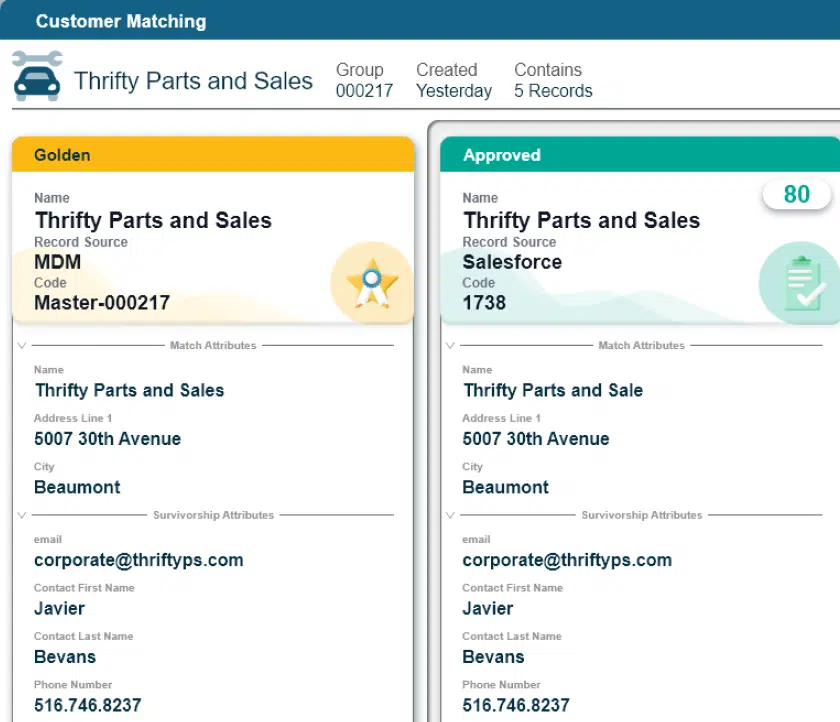
But now that we are bringing everything together, and we now have some sort of the data governance to say, okay, when we take in, let’s say, a community partner, restoring them this way so that we know that, let’s say, company X, Y, and Z and X, Y, and Z Co. Are the exact same company. So we’re able to bring them together. So we’re able to now identify what our partnership engagement is across different programs. So we might have a program, let’s say, with our tobacco initiative and our gun violence prevention program, and not knowing that they’re serving or they’re in engagement with the same community partner. Now we know that.
Just with making sure that we now know where those data is coming from and we’re able to bring them all together, they’re now having a better view of who we’re partnering with, who we are addressing and so forth. And as we’re building up a lot of our data in our data lake with all the different systems, we’re now able to hopefully bring in information from our different programs and see how, what the footprint is with regards to different services from our clinical, our dental, our school health, and so on and so forth to be able to identify really what’s our reach without duplicating the counts for someone. For example, Malcolm might be seen at our dental clinic and might be seen at our, let’s say, family planning clinic, for example.
Don’t want to count just two, but we want to count just one individual we’ve served across different services. So we’re getting there. And so we’re really happy that we’re able to see that the scope and the work that we’re doing within our community.
Well, that that was awesome. What you just described is my beloved master data management, MDM, to to a t. You just described it. Right? Which is having a single view of, you know, maybe a practitioner or maybe a person, a benefactor, doesn’t matter.
But once you do that, I mean, there are so many additional use cases here that you could be working with your provider network, you could be working with your various suppliers, you could understand the efficiency of all these programs. I absolutely love it.
Let’s talk just quickly and briefly about organization. Where do you sit organizationally? Are you in a CIO organization?
Just kind of how do the pieces fit together organizationally for you?
And has that been, you know, where you sit organizationally, has been a good thing?
So where I sit, I sit within the public health umbrella. So I report directly to the office of the health director.
So we’re part of our, essentially our administrative services provide services across all of public health. Within Mecklenburg County, we do have a centralized county office for IT, for HR, and so forth. So IT services are separate from our public health informatics and analytics division. So we my team is under the public health umbrella and we oversee all of public health in terms of data strategy and applications within the health department.
And I’m glad that you asked that question because that’s also one of the things that I am very passionate about, is that data governance is something that I believe should live within the business unit and not with IT.
So that’s something that I’ve been like making sure that it’s very clear, even though, I mean, our IT partners are great because they help us with making sure that we have our security and our infrastructure in place, but the data governance perspective of how we govern data, what data we govern, and how we manage it should come from the business. And so my position living within public health, living within the business, has actually helped us make sure that we are moving further along, right, than the rest of the county, just because we are very focused on making sure that we have access to data for reporting for a lot of those things.
Yeah. Absolutely love it. I mean, you just described, I was thinking.
When I was listening to you describe where you were, organization, I was like, ah, he’s on the business side, at least from a public health perspective. He’s on the business side. He’s not on the IT side. That’s even it’s even better.
So great lesson there. Again, regardless of whether you’re in public health or not, trying to position a governance function as close as you can to the business is gonna increase your chances of success.
What does the what does the future look like? What do you think are some of the things you’re going to be focused on in twenty twenty six? What are looking forward to?
For twenty twenty six, we’re actually focusing on a few things.
One is making sure that we are not only doing what we’re doing within our Data Governance Council, but actually making sure that we’re spreading out this information out to our public health partners, right? What we have experienced over the past couple of years, just because of a lot of these turnovers and all these issues that we’ve encountered, that a lot of their work have stayed within that particular group. Our focus now is to showcase the work that that group have done over the past two years now and share that across public health so that it can actually be utilized. Our Data Governance Council and our storage program have reviewed our data standards for minimum data set, for example.
We’ve done our data inventory and so forth. So we want to be able to publish a lot of our data dictionaries, a lot of our almost what we call our data encyclopedia, so that people know if you need X information, this is your data source and this is your data champion for that or your data storage for that. So we’re going to try to publish all of that within the next couple of months. And that will be our focus, to get those things in place because we think and we believe that that will be the almost like our first win for what this data governance success looks like, is that people start to use the information that we have published and shared as their guide for building new applications, building new surveys, so that when we bring that service back into the health department, we’re able to harmonize that with all the other service that’s been created across public health. So that allows us with a lot of that MDM practices from that level.
Love it. Sounds very foundational to me.
Very, very necessary. Excited about the idea of this creating some sort of marketplace. I mean, you called it an encyclopedia. A lot of others are kind of maybe calling it a data marketplace through some sort of access through some sort of catalog. But I noticed you didn’t talk much about AI.
I mean, you can’t have a data podcast these days without talking about AI. What’s what’s going on Mecklenburg public health from an AI perspective?
What are some of things you’re looking at or maybe not looking at?
So right now, our county’s strategy is to make sure that our data is AI ready. So there’s a lot of work being done right now to make sure that we are tagging data that will either have private information, you know, that kind of deal, so that does not get used in a lot of this AI work and so forth. So that’s the current work that we’re doing right now from a county level.
As with any other government entity, especially with public health, where AI is a hot topic because we know that if you do not have guidelines, you don’t have protocols for AI, you’re already late because your staff are already using it, right? So we do have some guidelines and parameters, but we’re still making sure that we are AI ready for that, that our data is not compromised when we do turn on a protocol for how AI can be used within the county and within public health.
There are a lot of great use cases for AI operationally, right, in terms of just reviewing policies and procedures, for example, AI will be great for that.
But again, because we make use of a lot of personal information, right, covered by HIPAA or by FERPA for our school records, for example, we need to make sure that all of those policies really are reviewed and are aligned with how AI will be used with those datasets. So that’s where we are at this point. We’re making sure that our data is AI ready by making sure that we’re tagging data that might have sorry, PHI, and and so on and so forth. So that’s where we are at this point.
It makes complete sense to me.
There’s there’s I don’t think that there’s necessarily any I mean, everybody’s focused on AI, a lot of people are trying to catch up. But at the same time, when you’re talking a government institution, you’re talking public health, I’m not entirely sure that that’s the type of organization that you would want to be an early adopter of anything AI. So focusing on MDM, focusing on on your encyclopedia and some of the basic definitions, policy review. But you just mentioned a policy review, just that AI can help with that.
For sure. You already mentioned that. But just making sure to get to the point where you’ve got your policies nailed down seems like a logical step. Jonathan, thank you so much for taking time to speak with our community today about what’s going on in your world.
Really, really take really, really appreciate you taking time to do that today. Thank you.
Oh, you’re very much welcome.
Thanks everybody for listening. Thanks everybody tuning in. Maybe you’ve downloaded us and you’re listening to us on a run.
If you like the content, if you like what you hear, please take a moment to subscribe to CDO Matters. We’d love to see you again on another episode sometime very soon. With that, I will say bye for now. Thanks again, and we’ll talk to you very, very soon. Bye bye.
ABOUT THE SHOW