




































The State of Master Data Management (MDM) 2026
What Data Leaders Need to Know to Make MDM Work in an AI-First Enterprise
As AI moves from experimentation into core business processes, master data management (MDM) must evolve. “The State of Master Data Management 2026” by Malcolm Hawker is a practical guide for data leaders navigating the shift from deterministic systems to context-aware, AI-driven data usage.
This year’s report moves beyond vendor comparisons and trend summaries to focus on how MDM programs must adapt to remain trusted, scalable and economically viable in an AI-first enterprise.
What Data Leaders Need to Know About MDM in 2026
Written by former Gartner analyst and Profisee CDO Malcolm Hawker, “The State of Master Data Management 2026” outlines the most important changes impacting MDM today, including:
- Why MDM must support deterministic and probabilistic systems at the same time
- The shift from a single enterprise version of truth to one version of truth per context
- How governance, quality and sharing rules must be derived from usage
- Why record-level trust remains essential, now evaluated at the moment of use
- How MDM connects data management and knowledge management
- Why product management discipline is critical to long-term MDM success
In this edition, Malcolm draws on more than 30 years of industry experience to explain not just what is changing, but what data leaders should do next to begin adapting their MDM programs.
An Adaptation Guide, Not a Vendor Guide
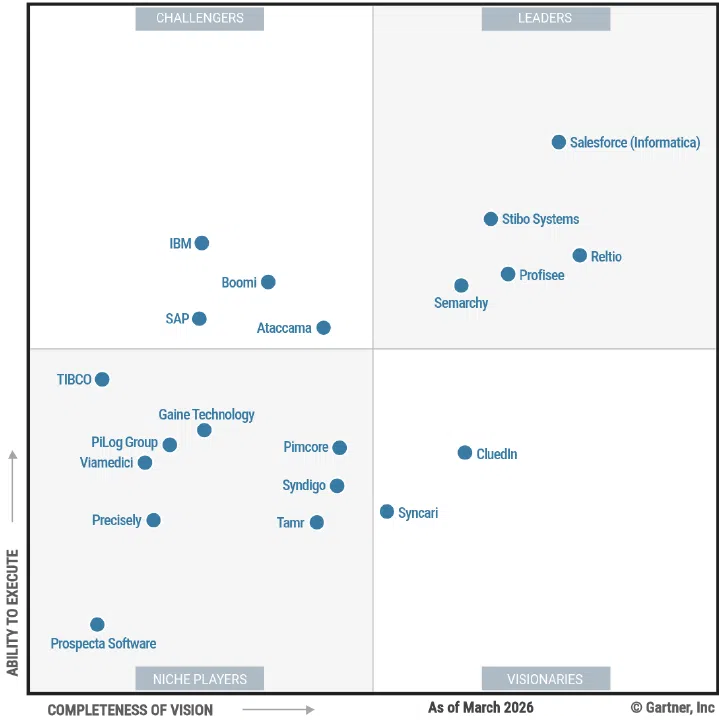
Unlike prior editions, the 2026 report intentionally steps away from detailed vendor comparisons. With Gartner’s Magic Quadrant for Master Data Management returning in 2026, this report focuses on the program-level changes that matter regardless of platform choice.
If you are evaluating MDM solutions, this report will help you ask better questions. If you already run an MDM program, it will help you identify which legacy assumptions no longer scale.
“The State of Master Data Management 2026” is designed to help data leaders move forward deliberately, rather than defaulting into the future by accident.