








































Episode Overview:
The AI Portfolio Dilemma: Why Most Companies Can’t Account for What They’re Spending
Most organizations are committing serious capital to AI and can’t answer a basic question: how much are we actually spending, and on what? That accountability gap is about to close, whether data leaders are ready or not.
📌 In this episode:
Why fewer than 5% of large companies can accurately track AI spend as a distinct category — and what happens when the CFO gets involved
The Vane Loop framework: a quadrant-based approach to scoring data and AI investments on feasibility and impact across 70+ factors
Why AI architecture decisions are now financial variables — and why most product managers aren’t equipped to make them
The strategic case for decommissioning: why building a library of reusable skills beats running 200 half-finished use cases
💬 The takeaway: “If you don’t manage your costs, your costs will be managed for you.” — Malcolm Hawker, Episode 104
About the host + guest: Malcolm Hawker is a former Gartner analyst, Chief Data Officer at Profisee, Editor-in-Chief of CDO Matters on Substack, and host of the CDO Matters Podcast.
Karl Ivo Sokolov is Managing Director at Specific Group Austria and co-author of Finance, Grade Data and AI Products. He sits on the US Institute of Management Accountants board and is the creator of the Vane Loop framework for AI portfolio steering.
Subscribe to CDO Matters Monthly → https://profisee.com/cdo-matters-community/#join-community
Episode Links & Resources:
Good morning, good afternoon, good evening, good whatever time it is, wherever you are in our amazing world. Thank you for joining us today on this the one hundred and fourth episode of the CDO matters podcast. I’m Malcolm Hawker. I am your host, your guide.
In today’s discussion, I am thrilled today to be joined by Ivo Sokolov who is the managing director of the specific group based in amazing Vienna, Austria. Ivo is also the book author. He’s not the book. He’s the author of a book.
Sorry. It’s Friday afternoon. My brain is slowly leaving the building. He’s the author of finance grade data and AI products.
A book we’re going to talk a little bit about today. We’re going to talk about Ivo’s perspectives on finance, FinOps, financial responsibility in an era of AI. We’re going to talk about ROI. We’re gonna talk about how to treat these AI products and these big, large initiatives.
Ivo’s got some really interesting perspectives here. He’s got a great substack as well. So with some really awesome thoughts in his substack, I I I fell down a rabbit hole reading his recent substack that he published on Bill Inman’s substack. So it’s a substack in a substack.
But it was a great article talking about how things are changing through the lens of kind of finance and financial operations. Ivo, thank you for joining us today. It’s good to see you.
Thank you for having me, Malcolm. Appreciate the invite, and it’s great to chat again after our recent discussion in person in Vienna just a few weeks ago.
Yeah. It was it was it was good. I was glad I ran into you. You and I had exchanged, well, probably a a few, you know, a few comments here and there, of course, on LinkedIn.
You had recently gone to Data Day Texas, and I don’t think you went to the last one. Right? Where was the ice storm? With the craziness and the ice storm? Yeah. Didn’t I didn’t go.
Yeah. Obviously survived. That was quite the experience. This was the this was the the final edition, so I had to be there. But, yeah, I think the community will continue to have such awesome kind of practitioner practitioner led events. Yeah?
Well, let’s let’s get into it. Let’s let’s talk about money, and let’s talk about AI. Let’s talk about your your framework. I I do want to learn a little bit more about something you’re calling the vein loop, which is kind of your approach to valuing efforts around AI.
It’s not just AI. It’s all it’s it’s all data and analytics projects. Right? I mean, your your your framework is is a way to consider ROI on all of these in investments in the data world.
Right? It’s not just AI.
That’s correct. That’s correct. I think the the interesting with AI is that, you know, everyone is running with their AI use cases list. Right?
We got a hundred use cases. We got two hundred use cases. The the larger the enterprise, the more, the more triple digit that the use case list is. But at the same time, this didn’t evolve out of nowhere.
I mean, people have had machine learning and other initiatives before and also data products, you know, trying to perceive, you know, to to look at more of those things as spending products rather than just one off projects. So the complexity, as I mentioned, I think there’s, like, a hype wave overstacking and hype wave overstacking complexity one after the other. And my co author, Mario Meyerhuber, and I, we were just we were just thinking that, you know, based on our experience as consultants, based on what we’re seeing in industries, that everyone is running trying to say how much value they provide, but we we saw little substance about how to simplify this in a framework that you can actually apply.
And the frameworks that we’ve seen seem seem very theoretical, and that’s something that you could run off to a boardroom and be like, well, it’s it’s a good approach. And so that brought us thinking, well, since we aren’t seeing this, how how how about let’s just draft one up and let’s see what people think?
And, you know, one one thing later than that is that we spent the better power of last year and especially over the holidays just finishing up the book. But the idea is that we’re seeing that it already. There’s a a ton to update even though we published it in January. And post co work, we’re already seeing things that we we, you know, we brought in that article and things like that.
You mentioned where we would add into the second version of the book just to keep it updated because this is just how how fast things are moving right now into the
Three months.
Three months. Yeah. So you wrote a book that came out in January, and already you’re talking about updating it, and it’s April.
Yeah. Already because you and and I’ll tell you why. I mean, one of those things, if you remember, of the second part of last year, you know, it’s still a real concern. Back then, it was, I think, a bit more real is that everyone was talking about the AI bubble. Right?
Yeah.
And and we were saying, it is absolutely true that the ROIs don’t pan out. It’s absolutely true that, you know, after the ends and then someone asks you, how much money did we spend on AI and and what did we get for it?
The CFO and the CEO may may not be thrilled. And at the same time, we were thinking, well, what does that mean for you as an individual company? How do AI bubble proof your portfolio while going significantly long on AI and implementing these things. But now the update is not like the bubble has shifted a little bit towards how do you control a cost such that you’re not, you know, beholden to a single company where the API breaks and the token calls exposed.
Seen examples with the with the recent switches where out of your two hundred dollar subscription, if you were calculate the token cost for for certain use cases, all of a sudden, it’s seven k. And so that’s quite the jump. Right? So that that that’s what will go to to an update to the book.
And, also, another frank frankly, another update if you if you if you see what’s happening is that I think we’re seeing a world where you would want to buy specialized AI solutions if you’re a major enterprise rather than try to develop everything on our own, even though we possibly could based on your teams or whatnot. Because the difference between very, very good and just okay is huge in terms of perception, adoption, etcetera. And so that thing actually solidifies our thesis in the book, which is portfolio steering is actually relevant again. It never really went away.
Many companies would claim we are doing portfolio steering for AI projects. What do you mean? Of course with the AI portfolio steering. But our point is yes.
But you might have a particular blind spot on data and AI because the things are moving so fast and because the make and buy decisions keep changing because you’d probably run off with a vendor where you do a strategic bet and you only know this company for two months. And that’s what many large corporations are doing right now as these specialized, you know, AI applications are, are solving particular problems in various industries.
And you’re not going, with the generic model, while at the same time, obviously, you’re going with the big labs for various other other use cases. So it’s a very exciting time to look at this as in your data products and AI, especially your AI use case list as a portfolio of bets, which more more aligns with the theory of you managing managing, like, a financial portfolio, really, where you don’t know what the winners lose are. You’re looking at yield curves. You’re looking at things that you don’t really talk about when you’re looking at a classic IT projects portfolio list. So, yeah, it’s, things are moving fast.
So so there there’s a lot there there’s a lot there to unpack. One is you you talked about kind of the changing financial dynamics here and things starting to lean a little bit more towards build.
We should talk a little bit more about that because I don’t think you’re talking about building everything. Right? Like, you’re not talking about building a foundational model. That that’s that’s that’s cost punitive, but but but you are talking about build building these these these custom customized application layers, something I think in your sub stack you called maybe a financial layer, but I think you’re talking about building more than that.
So so we need to talk about what what what the build actually is. That’s something that you talked about. You talked about kind of the unit economics here and and a focus more on AI as an infrastructure than than purely an individual capability or capability by capability. I think that’s something that we need to talk a little bit more about because on a unit cost basis, I mean, I’m living it right now.
I I I deployed OpenClaw a couple of months ago and and I just and I don’t use my my my personal Gmail that often. Right? I’m usually in my work and I’m heads down to my work and I looked at my Gmail box and all the invoices from Anthropic, I was just like, oh my god. Like, just I had no idea how much money.
It’s mostly my wife.
But but whatever. I had no idea how much money was going out the window in these in these open claw tokens. Like, good grief. So we need to talk about unit unit economics.
And then the third thing we need to talk about is what we call portfolio management. And this and this kind of this broader portfolio view of of AI investment. So, wow, there’s there’s a lot to there’s a lot to go deep on there. One thing I do wanna say one thing I do wanna say to to everybody is that if you were still in the if you’re CDO and you’re still in the camp of, well, I can’t measure the value of this stuff.
Yes. You can. EVO’s got a tool that can help you. He’s got a book that can help you.
We’re gonna talk about, yes, we can measure this stuff. But let’s go back. Let’s talk about the economics, the building. What what do you see people building, and what do you recommend is is the build part of all of this?
Right. So, what I what I see across the board is that, I mean, obviously, people are eager to build stuff with the with the newest, frameworks.
That leads to the fact that something you build like a chatbot you built, maybe you invest a lot of money to make it production grade WhatsApp, just a year ago, And and that is already, you know, that that is already something you should decommission and build from scratch, and maybe you can do it in three, four weeks, with the newer stack because the customer experience would just be so much vastly more better and improved and relevant that, is actually you can consider an and, you know, you can consider your investment more like a learning capability rather than something that you basically have to explain to someone, well, we just finished this this project. What do you mean we have to kind of start a new one?
Did you guys do a bad job or not? And, no, the technology is changing, so we really should the the point of the of the framework, the word loop comes from also from the OODA loop, which we talk a lot about about, which is, you know, comes from the US military, then also adopted by the consulting industry, but now kinda back again of of of trying to you you don’t wanna be the you don’t really you’re not really trying to be fast failing. What you’re trying to do is inside your competition’s basically, decision cycle and try to to to be a step ahead. And so with terms of building, what that means is that you have to really evaluate, first of all, you know, from the fundamentals, what is, like what are your what are your platform bets that that that you’re doubling down on?
How do you get the maximum out of it? And, really, what are the use cases that you should decommission and start from scratch? And maybe think of them end to end rather than mid to mid to into your business processes, which is a difficult organizational problem to tackle, but an easy technical problem to tackle. And so and then also the option is, of course, that you’re bringing someone specialized in that particular vertical of, like I mean, we would imagine what what we do for some.
An agent that solves AI management of AI use cases, which I you know, you can go ahead and build, and and you can you can take a team of three, spend three, four months building it. Why should you? We’ve already done it. So that that example replicates across multiple across multiple use cases.
But, also, what you don’t know, and this is another finding from the build, is that some of your use cases that are real winners, they didn’t come from management. They didn’t come from you. They came from business departments who scattered around the organizations, from people that found something that really scales up and brings a lot of value. And you have to have a framework that surfaces that up and and and scales that even though it’s not your classical way of how, you know, IT projects blow up.
I mean, I’ll give you we we we actually give a lot of examples in sales and marketing in in in finance. I mean, people have built amazing things that that actually save a ton of work.
And, also, the question that comes is, how about use cases that spend multiple departments where you didn’t really encourage that sort of thinking because every department brings up their own use cases, and they’re trying to optimize their own workloads. They’re trying to optimize their own relevancy.
But maybe you should think of it holistically in a way where you compress certain functions, certain processes, and build up others. So quite exciting to be in the build space in AI right now because of the amount of possibilities that open up, but also the amount of responsibility and amount of of of care that you need to take in order to not get things wrong because now you can get things wrong on steroids.
So so something I kinda concluded in in reading your one of your sub stacks, and and I want you to keep me honest on this, and and you and you you just inferred this in something that you were just saying.
Building is is is part of the motivation or even maybe the recommendation to consider building when two or three years ago maybe that wasn’t the recommendation. But would you be recommending this because you believe that AI investments should be CapEx and should be considered infrastructure and should be where the cost should be deferred over three, four, five years. Is that is that is that part of the kind of the portfolio play here? Is that is that is that you see AI as being more of a capital investment than just purely this one off OpEx and and and the problems that come along with being OpEx?
Actually, a quite interesting question. And the answer, I’m I’m sorry to say, is it all depends. Right? Because it it all depends because it it might even not it it might be neither.
Right? It might be it just might be adding it to the cost of goods sold and just pricing it completely differently. You might mean, right now, AI is also eating labor budgets. So there’s various things to consider when when and and especially consider a newer iteration of of co work where it’s not just design.
It’s like a procurement person, a marketing person, and all of a sudden, how do you treat that? So that that it’s quite a valid question. But I think you need really need to separate the fundamentals building, and they are solid. I mean, you see Databricks and and even Snowflake, and I I mean, they’re they’re actually continuing to grow, and they’re not you know, they didn’t experience that SaaSpocalypse moment because people know these foundations are needed.
And you kinda have to be on the platforms now. You cannot be on not there.
So so that fundamental CapEx build out is there despite you’d consume it as OpEx. But the internal investment is for you to build your own capabilities, be able to churn, you know, projects, use cases at a quicker cycle to know how to use these tools, you know, and to not use the slides from two years ago in Databricks, but just you have to be very current with this. Within your team, if you’re doing this, you go all all in and utilize it in your in your cross across the across the systems. And my thesis, and this is what put in the book is strategic decommissioning.
But you should double down on shutting things off because this is eating your innovation budget. It’s just basically your people experimenting with various systems, you know, like, trying every new fad and AI. And and and, basically, you’re still running your old system. You’re still running your Oracles here and whatnot.
And so, you you really wanna use this moment to do some architecting of of the base layer. Having said that, now the economics keeps changing again because on premise is the new cloud for various types of workloads. In Europe, we talk a lot about sovereign AI. The fact that that everyone is saying, well, you know, I you know, to not name any name, but the main lab right now, their API has been very shaky the past few weeks.
You know, as soon as Wall Street opens, the servers start not responding. I if you’re a let’s say my most of my clients are banks. Are you going to base your your your your very critical workload on an API that works like that? I mean, no.
As a startup, yes. As a as a major organization, you probably think twice.
There’s a shortage of GPUs. You know, we they can’t roll this out as as quick as the demand commands, and and and and, you know, that that leads to the token cost exploding. So there’s various things you need to consider when developing your AI strategy, and and it’s a continuous it’s a continuous thing. But one thing is certain, though, it is quicker to build new things than it than it ever was before.
And and and so if you if you manage your portfolio of bets on AI in the proper way, you can you kinda balance your longer term investments that have, like, a a longer yield curve where you really have to build a a one or two year investment in in in teams, in internal, internal build outs, until we can feel to fully utilize it while keeping options open. One the thing you just mentioned with your OpenClaw, and that didn’t exist just a few weeks ago, right, or months ago. And so so all of a sudden now, you can do a bot like that. And and and that opens up new opportunities for you, but opens up a new a ton of problems as well, right, not only security wise, but also, I mean, I was just comment commenting on Carly Taylor’s post today.
She I saw she commented back. Is that, I mean, we the Internet wasn’t built for for something like this. Right? It it wasn’t built for everyone being able to to have a bot that is basically active twenty four seven and churning out trend slop across the board.
So what do you do with that? I mean, it changes the the the nature of communication.
And so
Well, that’s something else that’s something else you you talk about.
You you talk about the fundamental differences between kind of legacy approaches and what’s needed now. Right? You and in in the subset that I read, you talked about the idea of, you know, AI ready data quality and how that’s that that is fundamentally changing. I couldn’t agree more.
I’ve been saying this for years. Right? What is AI ready is not the same thing as what is BI ready. And what you what you’ve been describing is very different.
How what frameworks do we need? Not just financial frameworks, but also kind of maybe even development frameworks. What you seem to be describing, Ivo, is is this new this new logic layer, this new decisioning layer that is extremely agentic, that works across multiple contexts, works across multiple domains. Right?
Because this is something you’re talking about, this portfolio perspective. Right? And is that I mean, that’s the world of the CTO. Is it not?
What you’re kind of describing?
It it they they they all kind of I mean, it keeps shifting. It keeps shifting. The reason the reason it is it keeps shifting. So let let’s walk this back.
Data quality was something we spoke with data people for years. We need data quality. We need good. Why?
Well, just because. Why why why would you be against good data quality? There’s no good argument against it. In regulated industries, as we’ve seen, it it it didn’t get solved until, like I mean, you remember the global financial crisis, then the BCBS, there’s a non regular regulation came for data aggregation because they figured, okay.
Risk data aggregation was a problem that led to, like, Lehman Brothers failing and and etcetera. And so, you know, for example, regulated industries like banks, like health care, they were pushed to have good data quality, while other businesses had to learn it the hard way. And then you had to argue extremely hard to the board about why do you wanna do, like, a data governance framework with owners and stewards and, you know, data kettle. So this wasn’t really obvious to everyone.
They had to you had to invent stories to get these projects approved. You had to make stuff up or show progress in other areas where they’ll be like, well, who cares? Two more million. We’ll invest in it.
Just get it done. Data quality doesn’t sound bad. Now the the game is kind of changing where architecture, proper architecture is critical to your business staying in the market. Right?
And so you wanna be you you wanna be set up in a way where your your legacy applications and your Mordant stack can can can can interact, and we have bots and people addressed properly. And so, data quality becomes an issue where you don’t want data quality for the sake of good data quality. You want data quality for particular things where where where it’s super great and others where you’re like, you don’t care. The AI can fix my data quality.
So all of a sudden, I’m seeing super deterministic things like, entity resolution projects where you want know, entity resolution on your master data becomes as as relevant as it ever was, while in other areas, you just don’t have the same problems anymore because it’s bots interacting with your legacy, system, not humans. And they they kind of you can kind of build it into the skills, and they can work around the quality, the the issues. So it’s it’s something I think takeaways that you need to do a conscious effort to to address to address this to both for different edge. I don’t wanna use the Augenticlare.
The big vendors use it. But for something like the Augenticlare, because, ultimately, it’s ETLs and APIs. There’s not there’s nothing more to it. And and and and where do you apply it?
I think it’s it’s a huge tailwind for our catalogs and and and master data management and metadata management initiatives that that many in the market are using to to to to set things up. Right?
Yeah. It’s it’s funny when you I was typing some notes to myself while I was listening to you, and and I and I made a note to myself that said, you know, this sounds an awful lot like my nineteen ninety seven services layer that we were trying to build in the late no. Like, this this this service layer that does it all. Right? That was kind of like then it went to to to Wizzles and then it went to APIs.
What you just said, it’s all ETL and APIs.
And It’s all. Yeah. Yeah. Go ahead.
Do do you wanna hear another late nineties analogy that I think applies to I love When people were when people were doing this AI you know, everyone has their AI center of excellence, enablement centers, I mean, all of those big words. And it seems to me that it’s basically the shared services of the early two thousands all over again, where where back then it was like, let’s out these guys are gonna outsource us to India or whatever, and and you guys should talk to this enablement center. And, you know, there’s a lot of context that got lost. I mean, they they didn’t see any usage.
All the divisions, you know, and departments, they found their workarounds. They found ways to argue why they should keep their, you know, critical vendors in the US and Western Europe and whatnot. And and it took decades for a setup to evolve where you have, like, international teams working together only after the technology improves and collaboration methods improve. And now we’re seeing the same thing in AI.
Right? They’re treating it as like, how is this any different than just, the shared services from before? But it’s a bit more technology than it was back then. You’re making the same mistakes because from the management perspective, I think you need to you need a different sort of of of really board level leadership to understand how to embed this correctly and and and and make use of it.
Or else we’re back to late nineties analogies. Right?
Yeah. Well, right. But something something that just popped off in my head while I was listening to you.
Yes. I I see a lot of similarities here around the shared services models of the nineties, and I I lived and breathed those models. And to a certain degree, they kind of especially from a finance perspective, at least for me, they kind of worked. As as long as I could get everybody bought into the idea that they truly were shared services. Right? And I could just allocate the costs on a percentage basis back to everybody. You get ten percent, you get ten percent, you get ten percent, and I build the thing, and and everybody benefits.
And and, mean, if that works, and there’s this, you know, attribution models are still being used widely by a lot of financial groups. But what what may be different now is that what we were building then and what we continue to build and what exists in the ETL and particularly the APIs and now increasingly MCP, most most MCP gateways are just hitting APIs. Right? They’re just they’re just they’re just agenic doors on on APIs.
Is is that the APIs are are executing, you know, features, functions, capabilities, and what we’re talking about here are skills, I think. And I think I think there may be something different between this layer of skills versus this layer of capabilities.
Or maybe I’m rabbit holing a little bit too much here, but
Let me ask you something.
Like Go ahead.
How many, are the big companies you think, maybe not Fortune fifty, but like, what would you consider a significant a major company with, you know, multiple divisions, large IT, etcetera? How many of them do you think can answer the question, how much are we spending on AI this year?
Oh, I I don’t I
think I number would they give you?
Would they give you the cost to to, like, open AI, Azure, cloud?
My guess would be accurately. Could they accurately tell you what they were spending?
Tracking it as a category. To be precise, how many attract accurate tracking it as a as a as a category of spent that is distinct and not just some five sums pulled up together and say this is our AI spend?
My my guess would be, like, under five percent. This this reminds me so much, Ivo, of of the birth of the cloud.
When Amazon came to prominence, there was a corporate account. You and and I was managing an IT function when this was going on. Right? You talk about the anthropic bills showing up.
What was happening in my in my organization was engineers were going and opening AWS accounts on their credit cards and then expense reporting back their their all of their AWS charges every month on through through company expense reports.
And we had no idea how much we were spending. Amazon Amazon came back to us and said, do you know that you’re spending blah blah blah every month on our cloud services? And I looked at I looked at the corporate Amazon account. I’m like, what?
Like, the corporate Amazon account, it says a thousand dollars and you’re saying ten thousand dollars. It’s like a function of ten x. How is this possible? Well, here’s all the people with your business domain who have signed up for personal AWS accounts and that are spending on it’s exact same thing’s happening now with AI.
Yeah. And and exactly. And and also so you have basically, you have the shadow you have the central AI driven by the, I don’t know, CIO, CDO. Then you have the shadow business department AIs that are really critical.
I mean, these guys are actually doing the work. Then you have the unaccounted for, you know, external vendors and whatnot and products and should we consider this, should we not? But actually, we got it because of AI. Then it does it count?
Does it not not count? Then you have the use case build out that you’re doing. Then you have these data products that you somehow now are packaging under the AI stuff because you have to get them approved and not otherwise, you know, boards don’t get excited about it. And so it’s very tough.
And I I’ve seen some company companies are thinking of moving them to a more structured approach to to tracking this, and it’s the the difficulty is that it’s you know, in the previous era where where companies had significant spends on machine learning, and and I’m thinking major manufacturing corporations, they actually had a con person from controlling and accounting, sitting in IT just doing that. Just like doing it not as a as a software, doing it not as a as a agentic, infra, but like an actual human that is just tracking spends on these machine learning projects. Now with the AI, the confusion is even higher.
And and I think what boards will require and and, you know, ultimately, shareholders will require in the market is to say, if you guys if you’re a large company, we expect the CEO and the CFO to commit a large amount of money to modernizing with AI.
We wanna know how how that has to trickle down to to every individual person and project level, and that has to get tracked and somehow pulled back into the accounting systems into the daily operations of the ITs doing that in order for you to show that you’re doing savings, that you’re improving capabilities or increasing revenue. Right now, we I think we’re quickly reaching the stage where just storytelling and feel good use cases is not relevant anymore. Right? Well, I mean, there there’s actually but there’s diff we can talk about where’s the caveats and and how this could go astray on a macroeconomics perspective.
But on individual company perspective, it makes absolute sense to to do this to do this correctly and honestly. And and and I I think we’ll see, you know, some so also some of the big software vendors implement functionality that would support this ROI view of things in order to to stay relevant. Even though they somehow got in as a vendor, they would have to do this a better job at showing the ROI.
So in my experience, this is the this is a message to data leaders in in my experience. And and maybe you’re listening and maybe your experience is different.
It’s just that in mine, and this is this is real gray hair here my friends, and if you’re just listening, you’re I’m poking at my increasingly white head.
In my experience, if you as a data leader or any IT leader, it doesn’t have to be data. I I was running an IT function as, you know, acting CIO.
If you don’t manage your costs, your costs will be managed for you. That’s that’s that’s my experience. Meaning that if this AI thing gets out of control and and the the token start flying out the door and the car costs start going up, up, up, and there is no story there around value. There is no story being told. Maybe it’s enough to just check a box and maybe your board will give you a year, maybe your board will give you two years because maybe you have checked the box even if it’s net negative ROI.
But my in my experience, if you’re not managing the cost, the cost will be managed for you. And this is why I’m actually seeing more and more more and more AI functions, not a lot, but but greater than zero get getting folded under a CFO for this very reason.
Oh, yeah.
To, yeah, to to manage a lot of these costs. So this this my recommendation here is something I’ve been saying consistently for the past couple of years is hire somebody who knows numbers, hire and, Evo, like, you’re basically saying take a portfolio management approach here, manage this as a portfolio, stand up, in essence, a a PMO like function to get your hands around all of this spending because if you don’t, it will be done for you. What what do you think about that?
I think that, I think you’re onto something here, Deus. I I am also I have also this management accounting background, and I sit on the US Institute of Management Accountants board. And the discussions that I have with a lot of a lot of companies with management accountants is that they’re also, I mean, they’re wondering in a in a traditional economy. Like, let’s say, if you’re producing a product, you you you have a fairly good grasp of how the cost structure is.
You know? Fixed cost, variable cost, overheads, attribution, you know? All of that stuff is actually pretty done in a pretty solid way. Once it comes to data and AI, there’s no there there’s no rigor in in doing it the exact way for various reasons.
Because it’s a bit more technological rather than physical products and bill of materials. Because it’s the frameworks, the technologies, the methods keep changing. You know, so many things are, you know, make versus buy. There’s so many things that flow into understanding the economics that it’s it quickly gets it quickly gets too complex.
But I think now, we’re gonna enter the era where the management accountants will get more involved into into the data projects. So the CFO function, as you alluded to, will get more involved. And it’s going to be a collaboration with CIO, CDO, CTO, whoever runs the technology show based on the industry, is is going to be, well, either working for or with the CFO in in a more detailed and and more rigorous way than they did before because you’re going to have to show results and not just capabilities. So that automatically makes it a more more more financial, you know, more financially exposed.
The token economics you you alluded to is one example, but it’s not just. Right? It’s it’s the life cycles of the products. It’s, you know, the the risk decision.
I think what’s something we didn’t mention so far, but it’s definitely top of mind for for, like, the especially the regulated industries. Like, they’re looking at all of that, and they’re like, if I’m a bank, well, we’re not we have we have cash for the projects. We’re not worried that we’re gonna go over budget on the projects as much as we’re worried that we’re gonna mess up the risk surface area in terms of introducing either something that messes our results, that is not accepted by clients, that is not accepted by regulators. I mean, the risk component is a huge one for many organizations.
And there’s also a third option for organizations like that have a huge r and d basis. They’re neither worried about cost nor about risk. They’re worried about how do how do we get the most, you know, verifiable bank for our buck investing in in AI spend and and and data projects in this new era. So each one of those are going to have to settle into some sort of a value proving world that they just weren’t doing right now.
Two roles that I’ve been saying consistently and I will continue to say, product management. Right? Because, Gisiva, what you just said I mean, I you you you I think you could argue in very large companies for for a PMO type function, product management or project management office where with professional project managers who who, you know, are are are managing all the Gantt charts and all the deliverables and everything that are helping do the the the cost basis upfront, that are helping do the analysis upfront. For very large companies, I think that makes sense.
But if if you’re not in the fortune five hundred, I I and but you’re running a data function, I think a product manage not a project, a product manager can be a huge help here because they know things like life cycle management. They know things like doing r o doing business cases, building ROI analysis, or or whatever your preferred financial metric is. Maybe it’s TCO. It doesn’t matter.
But prod product managers are skilled at this stuff. Right? Plus having somebody who knows the numbers. Right? And who can help you build these models using tools like Evo has built, using using insights that are out there.
This is this is possible. Right? This is not theoretical. I would argue this is absolutely in twenty twenty six, what we just described, good portfolio management, right, good product management, good project management, and good financial management.
It’s two people, I I think. I think that you could get away with two people. That’s that’s that’s what I think. Let’s let’s finish the conversation on this idea of of, you know, AI and maybe building I I’m really attracted now to this idea of like building this library of skills.
Right? Like building building out as as my new AI services layer. Like, I’ve got I’ve got a bunch of skills like, you know, customer due due diligence or supplier due diligence or name of skill.
As as infrastructure.
So when it comes to AI as as infrastructure or architecture, that’s just something you said often in your sub stack. This kind of AI is architecture and not capability. What does that mean to it to a CDO? Does does does that mean, how do I how do I go about this looking at this as architecture, and what benefits does it give me?
Okay. So Go ahead. There’s what what you need to understand is that it it that the architecture component is even more important now, and it’s we’re behind what’s behind us is the the the decision. What is a good architecture that purely it’s just the best technologically?
And now, the question is, what is the best architecture that is the most adaptive, that is the most financially viable? And that is basically an architecture that is a financial variable rather than a pure technology discussion. Of course, it is a technology discussion, but you you view it through additional lens. And I would actually go ahead and and and for for various project managers question the financial rigor, for many product managers, I would suggest to improve it.
Because if you’re taking decisions on architecture, you can miscalculate and misallocate a huge amount of money compared to what any procurement department might save you by just being great negotiators. So all of a sudden, that this that that architecture decision is has implication. It always had, but this it always was a longer time span. It didn’t change all that often.
You could do all of these RFIs, RFPs. You you you could have, like, multiple gates of of of, you know, making sure that you’re insuring against a bad decision. Right now, with the quickly changing technology aspect in in in data and AI, you know, just just really reinventing your architecture, if you will, you know, where needed is is is a critical skill. One thing I wanna comment on is the product thinking.
I just want to mention that what you said is super valuable because this data product, the rise of data product kind of coincided with the AI wave, and I think it it it kind of went out of fashion unnecessarily. I think the the the way that we view it is that you need to marry them together. The data products list with the AI and I know the discussions that if we if we were to having a nerdy discussion about the semantics and the be really pedantic about what we mean by data products and what that, we could spend another five hours doing that. But the point of the matter is that in you can if you have responsible peoples for products, they act differently than just, you know, a collection of of of highly capable technologies that want to to to to get the best architecture possible.
In fact, I’m telling some of my clients that where they need this portfolio steering lens and product thinking lens the most is the bigger companies that had a lot of architects. So it’s a function of if you have a lot of people that want to to build great and complicated infrastructures, this is where we actually have a problem with the cost. Not if you have very little capability. There, you tend to be way more pragmatic and way more focused on what’s really relevant than if you just have, like, five enterprise architects in in the CTO function.
And so it all plays together. The point from from from, you know, from from the article that you mentioned that Mario and I wrote for for for for Bill Inman’s Substack was that you need to treat this architecture decisioning with financial lens.
Our suggestion to this is that most companies start feeling some sort of a private equity type environment pressure, just in the general sense, even though their financials might be healthy and they might not be private equity owned. But the same principles apply. Right? You need to map everything to cash. You need to map everything to how you’re building out the asset base and protecting equity. You need to build you know, you need to map all the initiatives into what reduces risk. And and that was just not really the discipline that all data practitioners and especially software development teams and and and application development teams used to operate in.
We’re we’re very, yeah, eager to see how how the industry develops. I think there’s never been a more exciting time to be in IT than than than it is today. Yeah.
Could not agree more.
Could not agree more. So I love the idea of managing a data function like if you were at a PE firm or maybe even a VC firm where this is a capital allocation question. Right? I’ve got Yeah. Certain amount of capital that I can deploy, and how do I deploy that? And looking at taking that approach to your investments in AI, I think if we did that, we’d we’d be a lot more efficient. We would be better at prioritization.
I think I think we’d move a little faster perhaps. So I I I love that perspective.
I I can’t I can’t avoid the discussion on data products.
Let’s let’s double click on that if
we got
a little bit of time.
Yeah. Let’s see.
We do we do. I I I have a little bit of time, but I’ll I’ll be honest, Ivo. At the beginning, during all of the the hype around the mesh, I I was not a big believer in data products. And and that’s because most of the time people referred to data products through the lens of scale.
You ask the quest if you ask the question of why should I do a data product, The answer was so you could scale your your your data function. And there’s plenty of books out there. Some some friends of mine, Pjan Strengthold, talks about this in his book of data management at scale. Andre Goya talks about this in his book, managing data products.
Ex excellent book, by the way. And and and they talk all about scale. And I come from a product management background. I’m like, well well, that’s very internal.
And who cares about that if our customers aren’t happy? This should be about customer success and customer happiness and customer enablement and driving value. Hard stop. Products should be about driving value.
As it turns out, we’re fast approaching a world where our customers are agents.
They’re robots. Right? And the robots want data products. They want data contracts. They want SLAs.
They want they want automated governance policies. They want metadata. They want lineage. They want all of it in it, this packaged thing that they can consume very quickly in a machine readable format.
Well, they they so I was always right and so were Andre and PTEN and everybody that was talking about products for scale. We were both right because if your customer is a robot, you have to build the data products. Right?
Right. Absolutely. But let me let me unpack a few things about how we, by writing the framework, approach this and say, we we we look at all that literature and and it’s all valid. It’s all absolutely one hundred percent true.
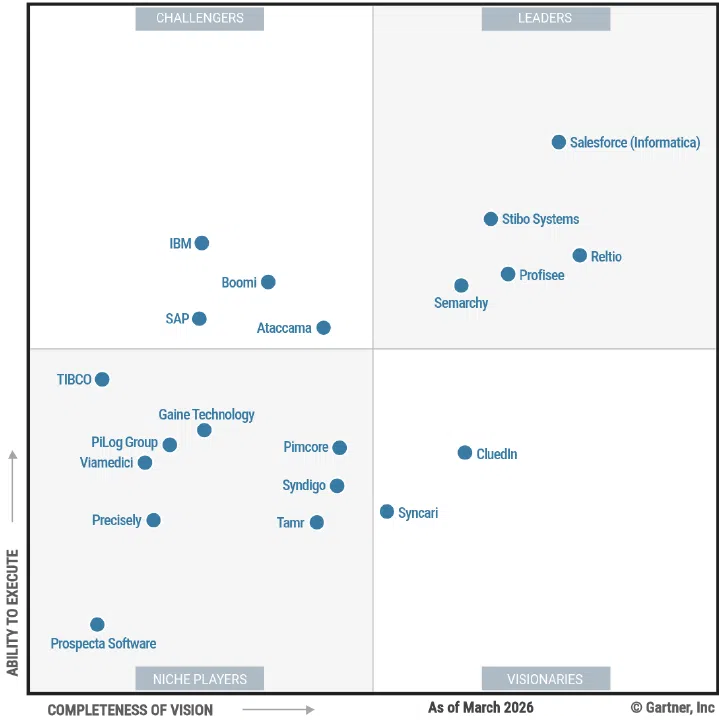
But, our our view on things was and it’s similar to the Gartner Quadrant to say, if I come into a company and I wanna see, you know, what are your data products right now? I want them mapped out on a quadrant. And I want them mapped on a quadrant that I can see where the access that we talk about were visibility and impact. But the visibility and impact are kind of multi determined by seventy factors.
So it’s not, you know, how do you define feasibility? Well, we have to build it by aggregating a bunch of information around anything data rate, like data quality, data freshness, data readiness, infrastructure capability, people, teams, risk, many things. Impact. How do you measure impact?
I mean, is it just ROI? Is it just improving capabilities? If you wanna do data products with all the bells and whistles that you mentioned with contracts, with with SLAs, I mean, building a data product like that is not free. You can build a simple a simple data product.
You you you could build like a sort procedure and a view and then it’s data product.
Is it
a data product?
I love it. Love it. Yeah. But if you add all of the thing around it to make it a product, well, then the economic shift, is it still worth it?
Maybe. Show me. And so if you if you map them out, if I wanted to invest if if I wanna do if I wanna be sitting in a committee and deciding on whether I should fund these data products or those data products, I don’t want them to be bringing me slides and saying, we figured these are the five greatest data products. They will scale like crazy if we only spend, like, another million building them out.
What I wanna see, what’s the decision on the margin, and and how how would these scores move? And so that’s, at the same time, very technical and nerdy, if you wish. But I figured if we were to be a more if we were to take a more detailed approach into what would it actually take, this is what we came up with. And so the idea to rank them in a garden similar quadrant and and have your data products visible there is a a different quality of discussion if someone is saying, well, actually, we thought that this scales better or produces a better result.
And then you can say, well, let me see all the fifty assumptions that are built in there, and I can tell you why. If you believe any of them is wrong, then let me know. We can adjust it. But people seem to be the disconnect between the board level decisioning on this data stuff and the actual teams has always been crazy.
No one ever talked about it that much because it makes them look bad, but it definitely is the case because the board doesn’t understand that some of the stuff that’s been promised is not feasible, not immediately feasible, not feasible if we do everything all at once feasible. And so, I think that was kind of missing in the data product discussion.
Everything you talked about the is is portfolio management. Right? Like, the idea of evaluating spends on the quadrant, feasibility, impact, cost, that’s how a board thinks. You’re absolutely right. It is how a board thinks, and we need to do more of that. Ivo, my friend, thank you. It’s a great discussion.
If you are not connected or following Ivo Sokolov on LinkedIn, you should be following him. He’s brilliant as you could tell. You should absolutely check out his book. And I do need to make an apology to Mario.
I called you the author of the finance great data and AI products. You’re the coauthor. Thank you, Mary. Yep.
Thank you, Mario, for for your efforts on the book as well. Check out the book. Check out Ivo on LinkedIn. Check out his sub stack as well.
He’s got some great thoughts there. With that, Ivo, thank you for joining today.
Thank you, Malcolm. Thank you so much.
Thank you. And if you have listened this long, please take a moment to like, to to subscribe, to join this growing CDO matters community. We do this every two weeks. I’m creating content for CDOs and people who want to be CDOs, and hopefully, you find it valuable.
With that, I will see you on another episode of CDO Matter sometime very soon. Bye for now. Thanks, Ivo. Cheers.
Bye. Bye. Ciao.
ABOUT THE SHOW